Woven Heritage
Centuries-old vocabularies of block, resist, weave and hand are honoured without imitation.
Jaipur · Chapter One
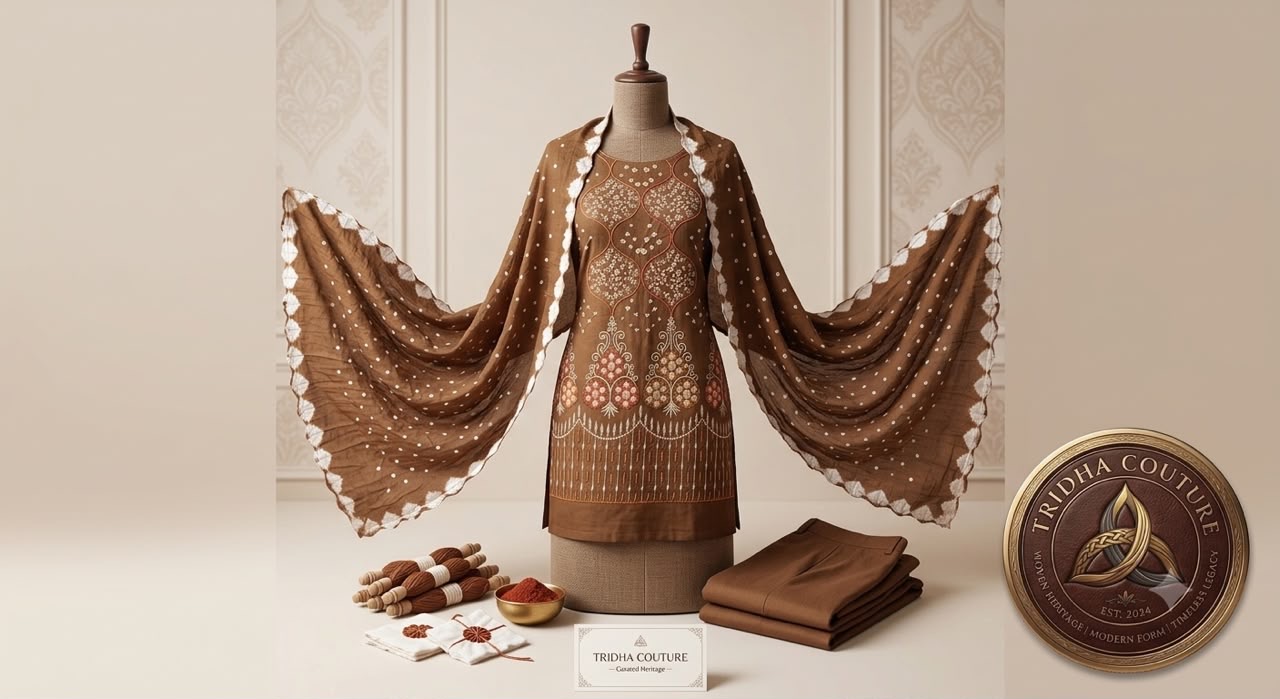
Woven Heritage. Modern Form. Timeless Legacy.
The Tridha Philosophy
Three movements, held in one garment: the memory of the hand, the clarity of the present, and a beauty made to outlive the moment.
Centuries-old vocabularies of block, resist, weave and hand are honoured without imitation.
Ease, proportion and quiet geometry allow traditional cloth to inhabit a contemporary life.
Considered pieces, made slowly in Jaipur, to gather stories across years and generations.
Launch Collection · Fifteen Distinct Craft Stories
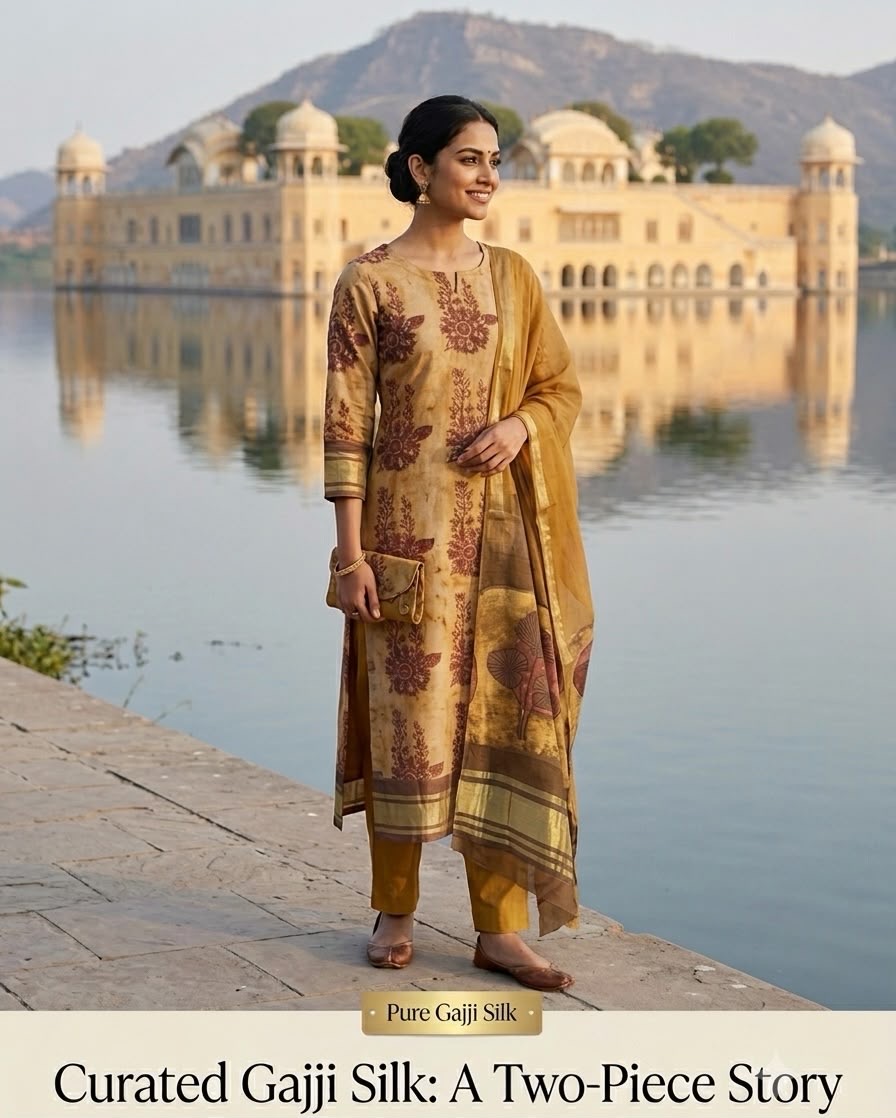
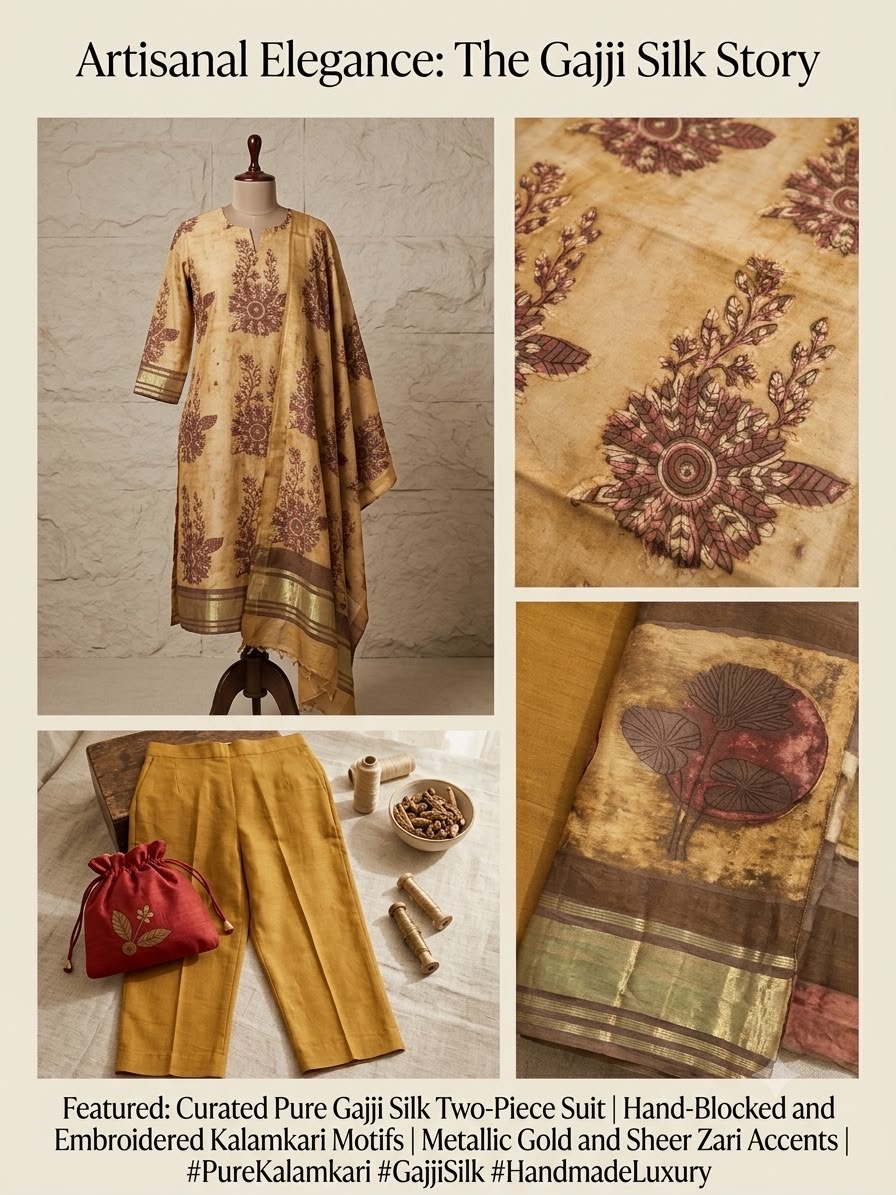
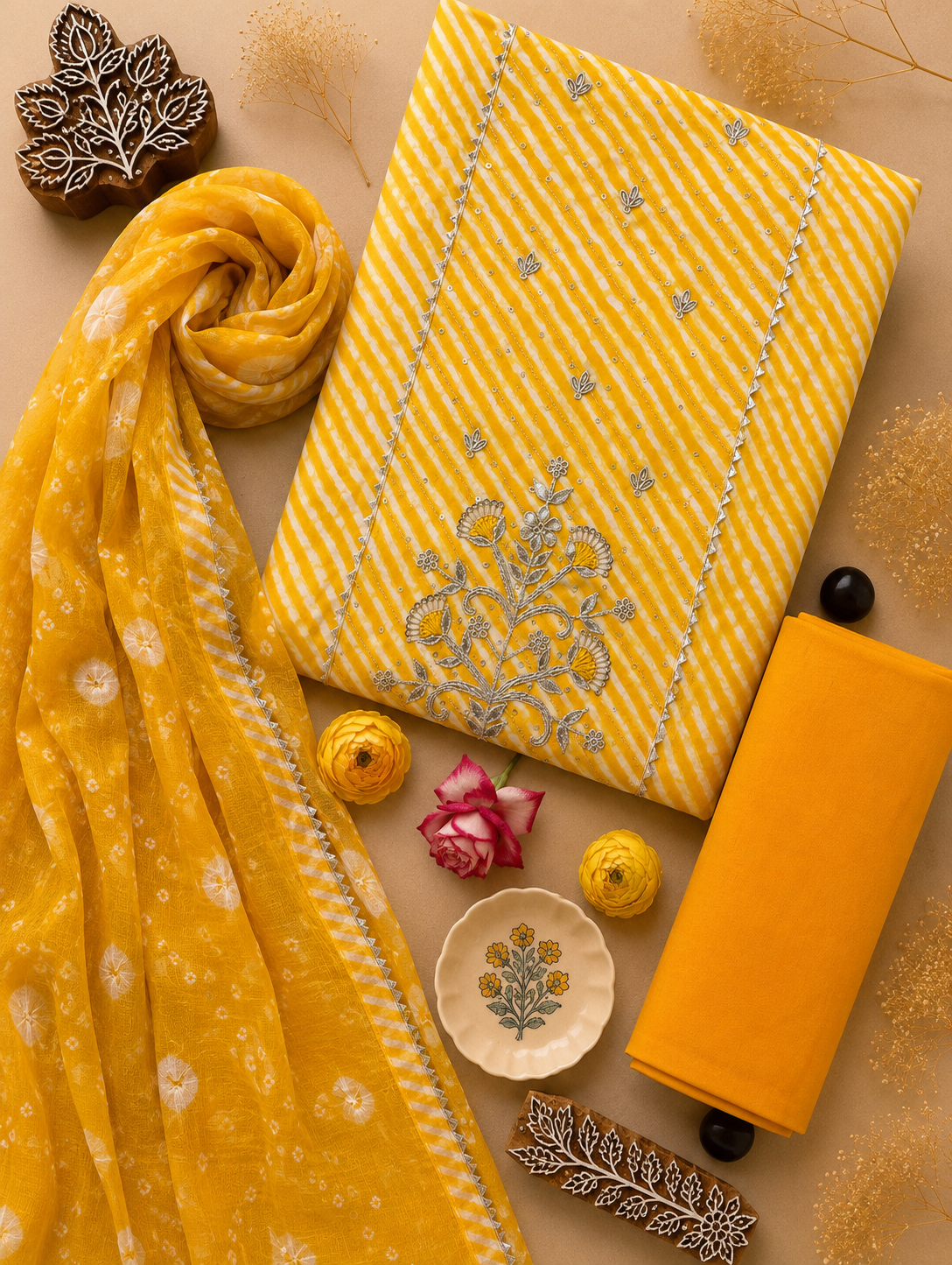
Ochre gathers here like late sun upon palace water. Lustrous Gajji silk carries hand-blocked Kalamkari blooms, each contour deepened by embroidery, while metallic gold and a breath of sheer zari move across the surface like light finding its way through a carved jharokha.
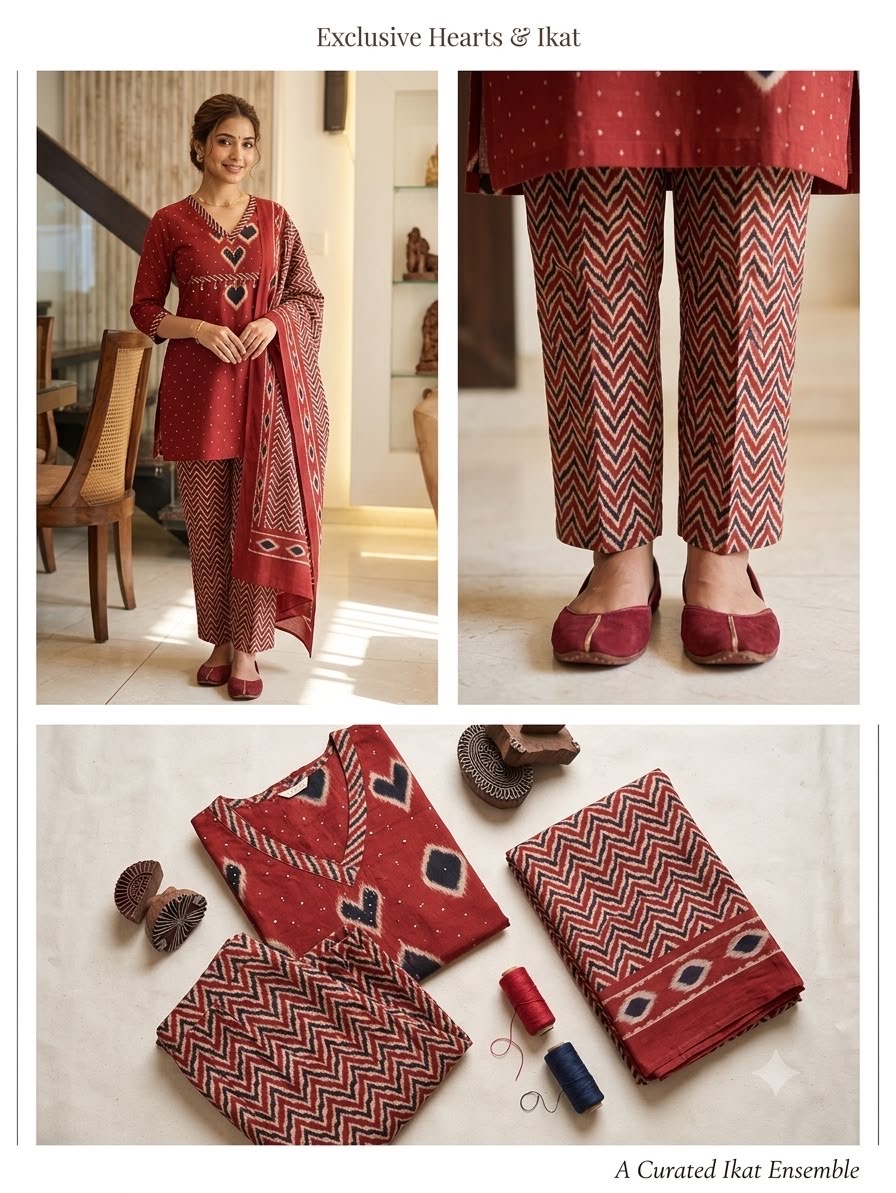
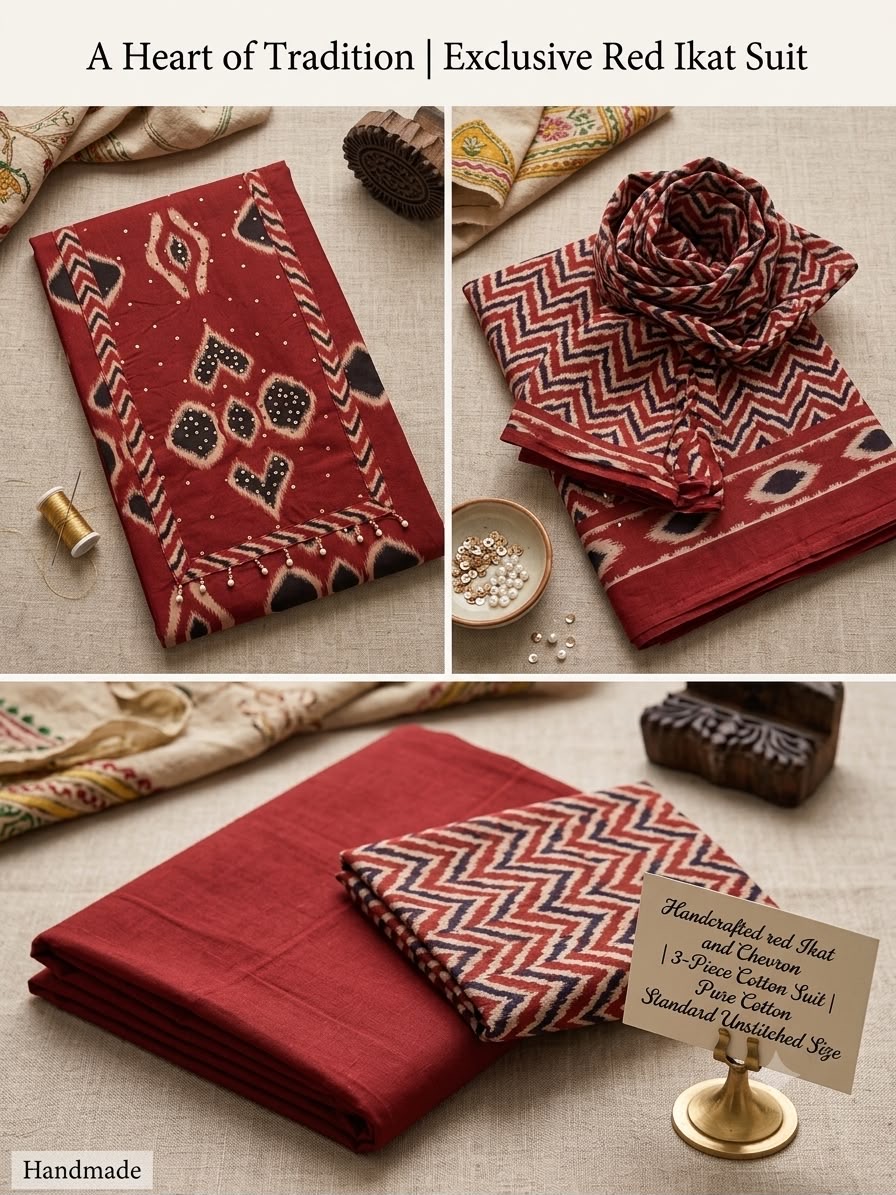
Crimson arrives not as ornament, but as rhythm. Handcrafted Ikat chevrons pulse across long-staple cotton; graphic borders give the softness a decisive edge. A clean v-neck and straight trousers turn the ancient blur of the loom into a silhouette of poised, urban certainty.
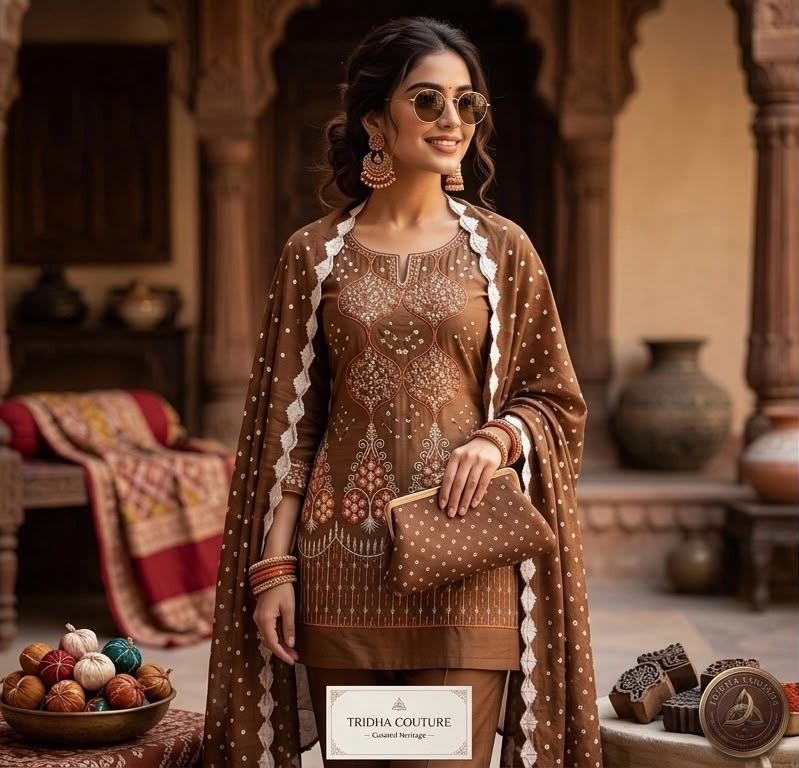
The desert leaves its quiet signature in mud, mineral and hand. On hand-spun linen-cotton, Bagru's Dabu resist preserves pale constellations against terracotta fields. The slight irregularities are the maker's pulse—earth transformed into pattern, and pattern into memory.
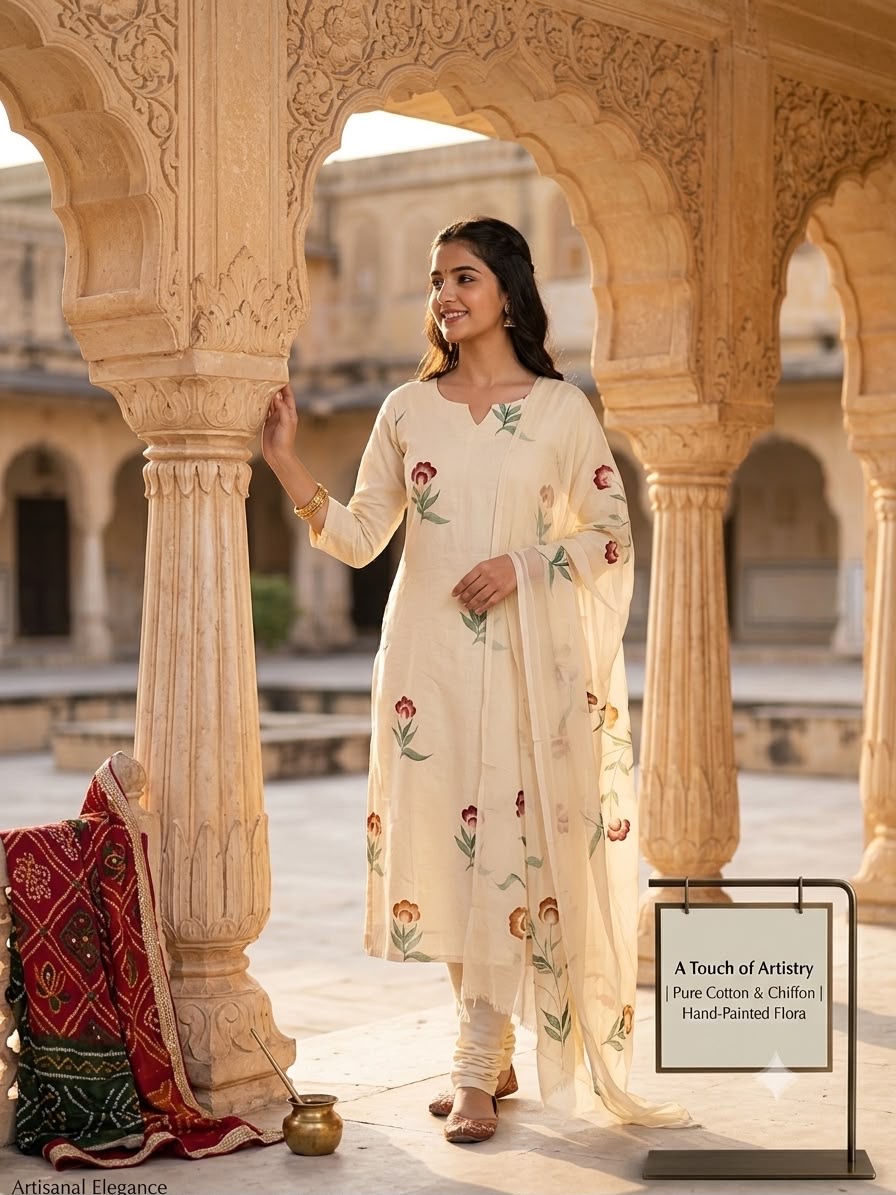
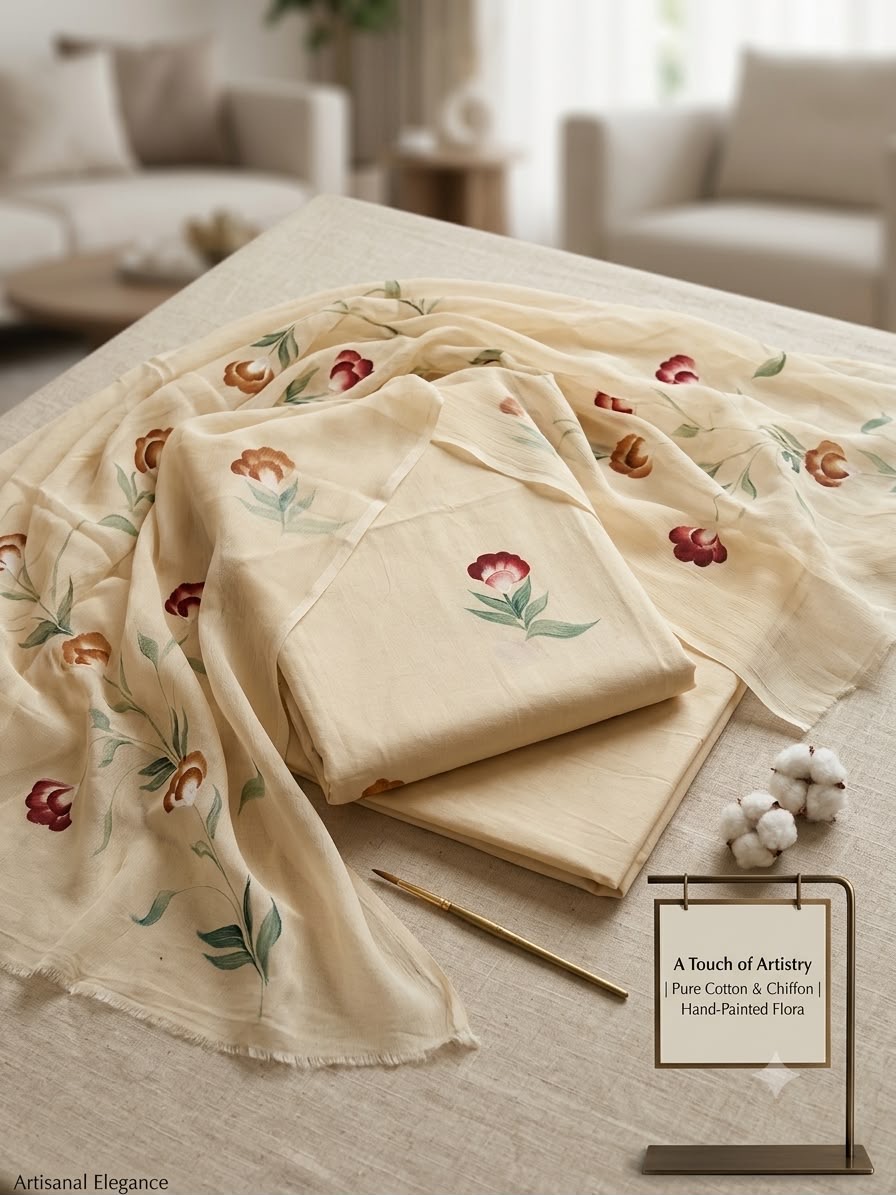
An ivory courtyard at first light: still, luminous, newly awake. Botanicals are painted by hand across fine-weave cotton as though a private garden had drifted onto cloth. The paired views move from its sunlit silhouette to an intimate study of the brushwork, while pure chiffon floats almost without weight—a translucent pause between blossom and breeze.
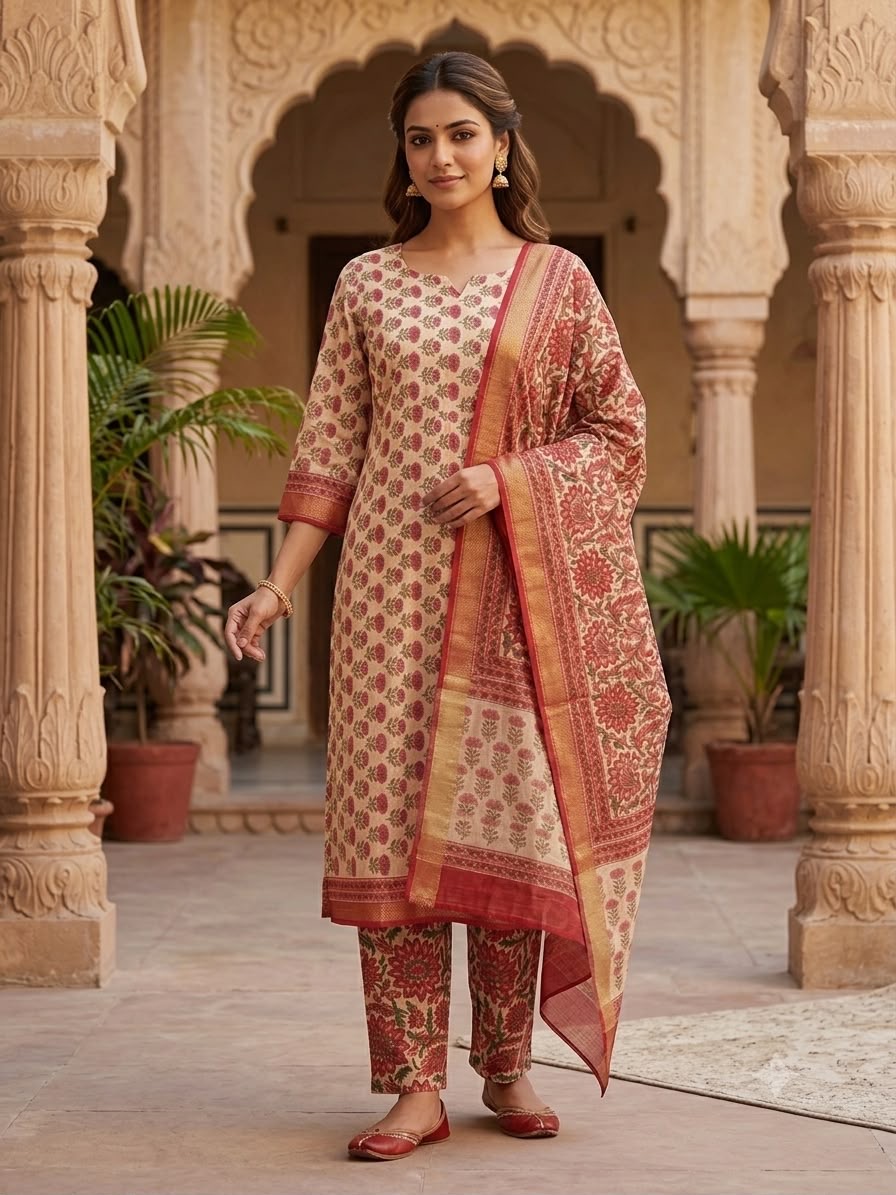
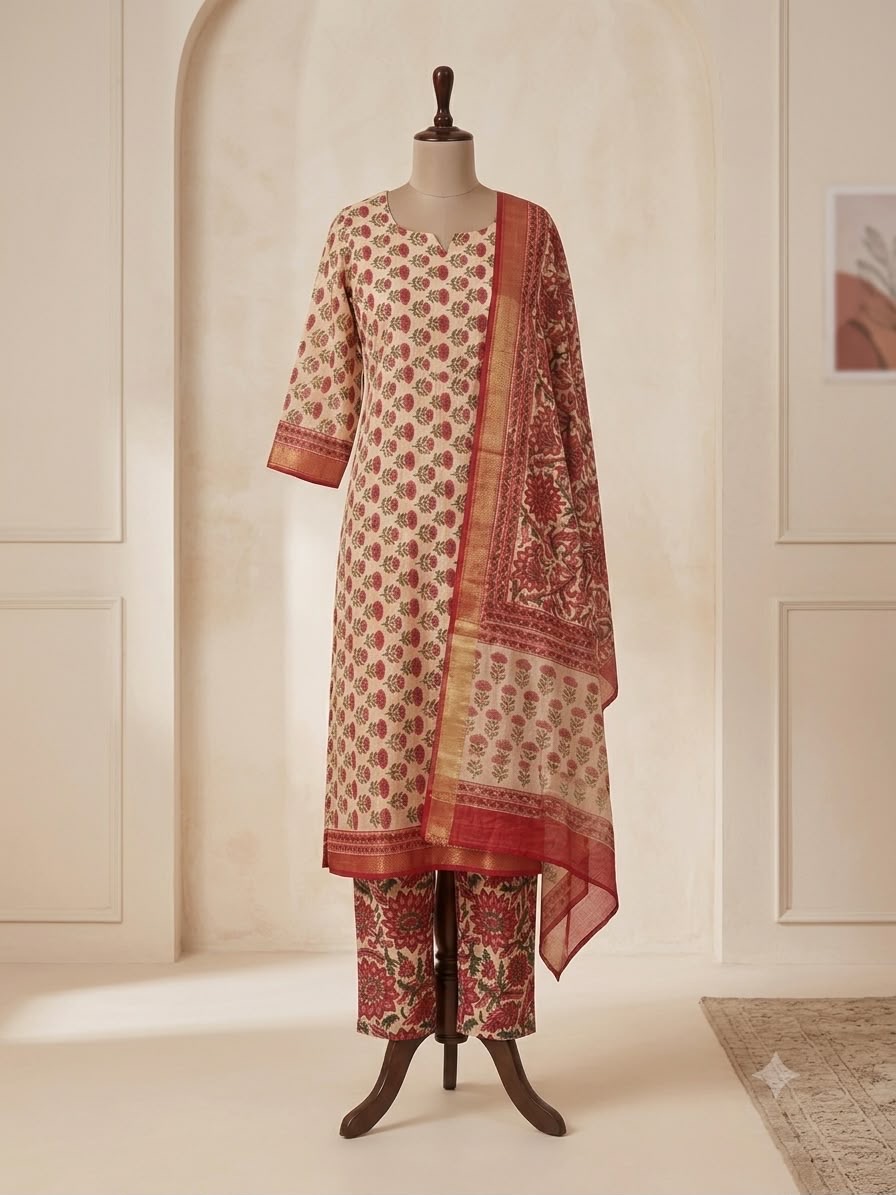
Small Sanganeri butis fall across sheer Chanderi like rose petals remembered in a miniature painting. The silk-cotton holds air and light in equal measure, while an authentic woven zari border draws a final golden line—the old discipline of beauty, made effortless.
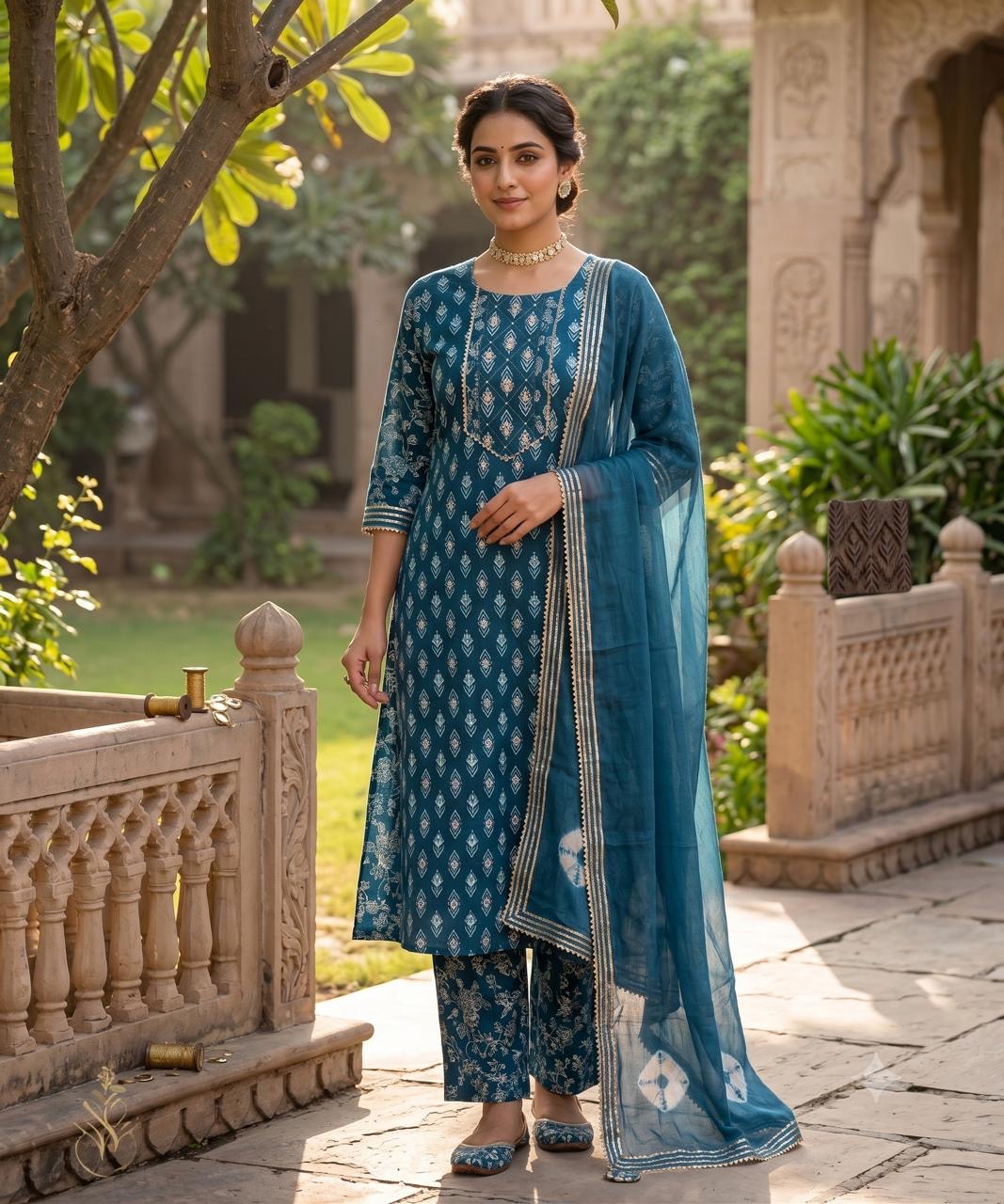
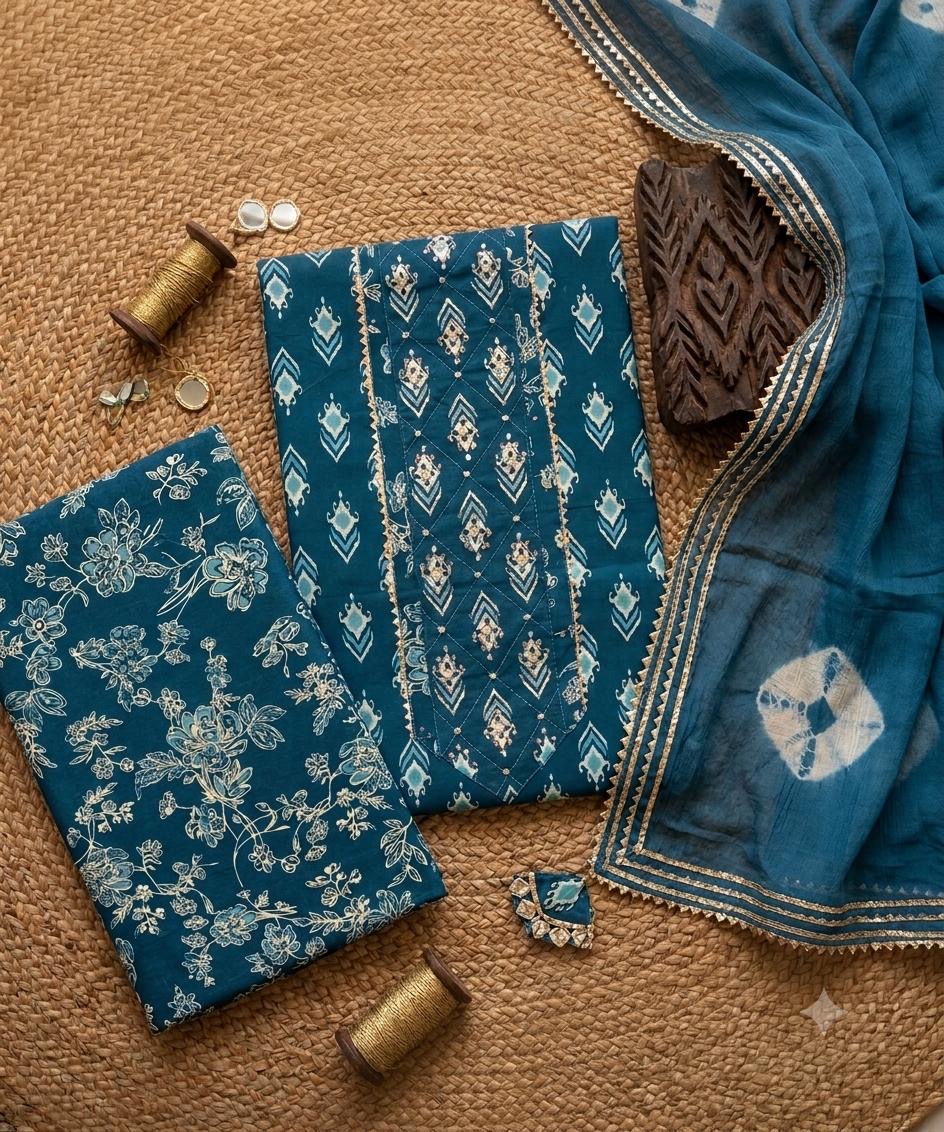
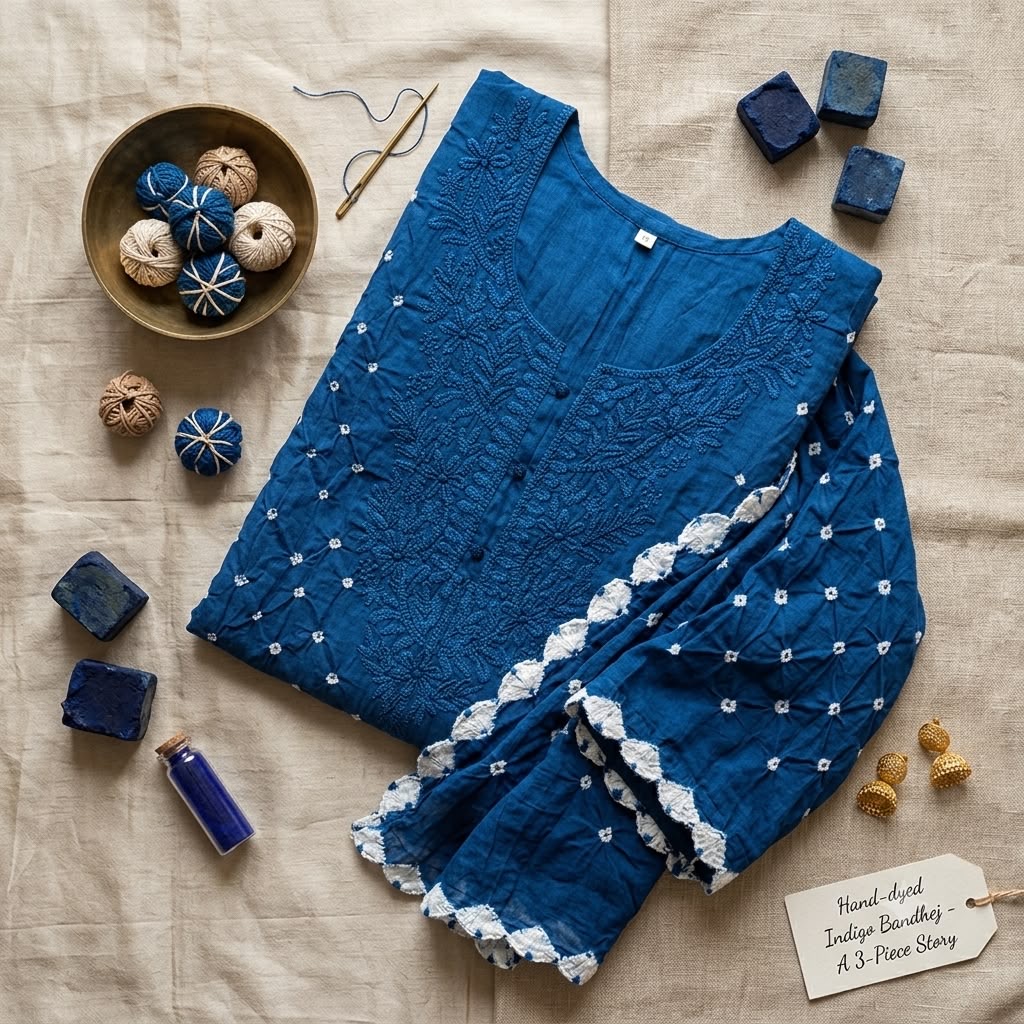
Indigo takes on the depth of a shaded Jaipur garden. Fine floral trails gather at the hem and trousers, while a geometric yoke catches small glints of hand-finished light. The airy dupatta carries resist-dyed marks like quiet moons—each layer composed, but never overly arranged.
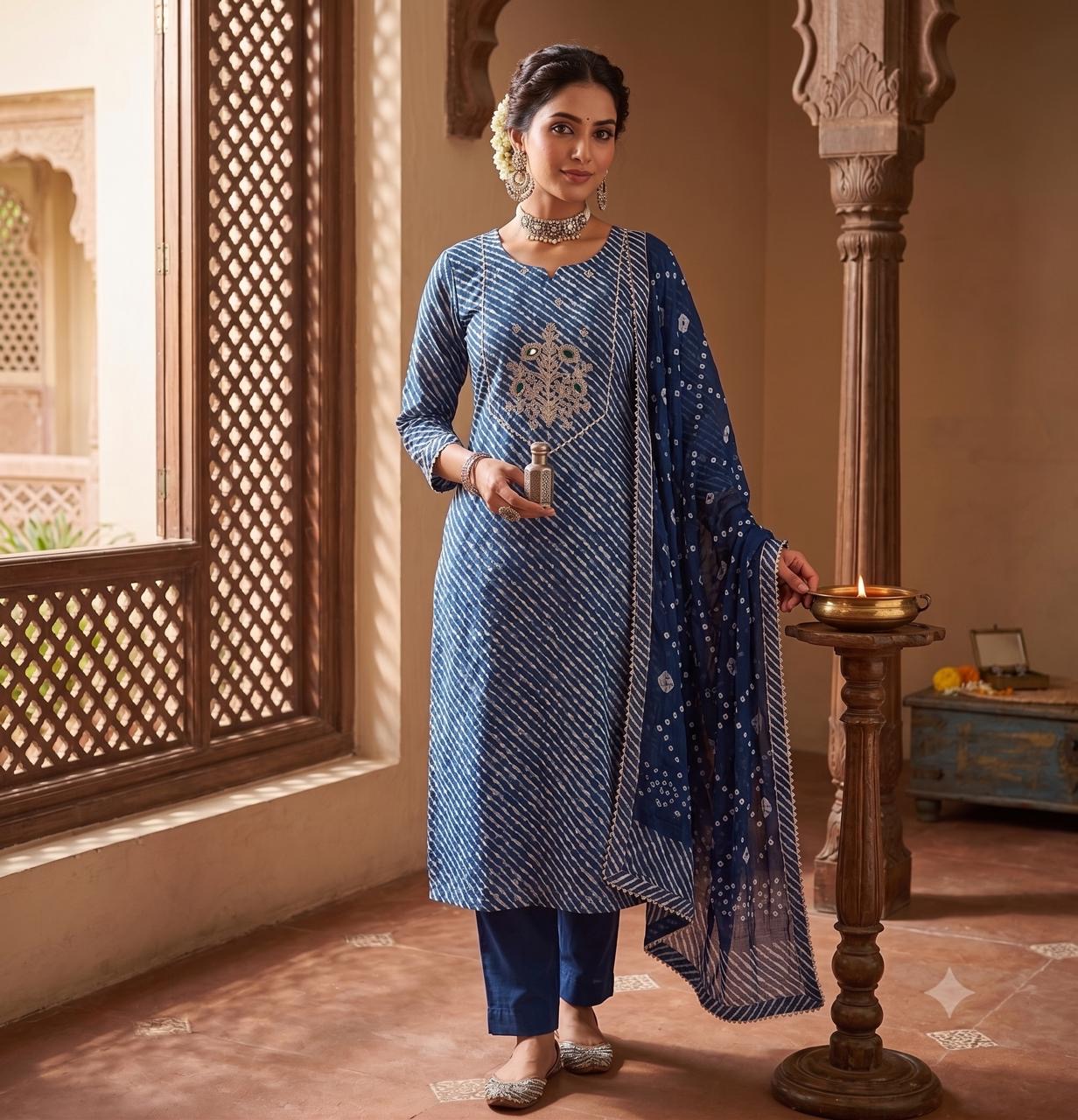
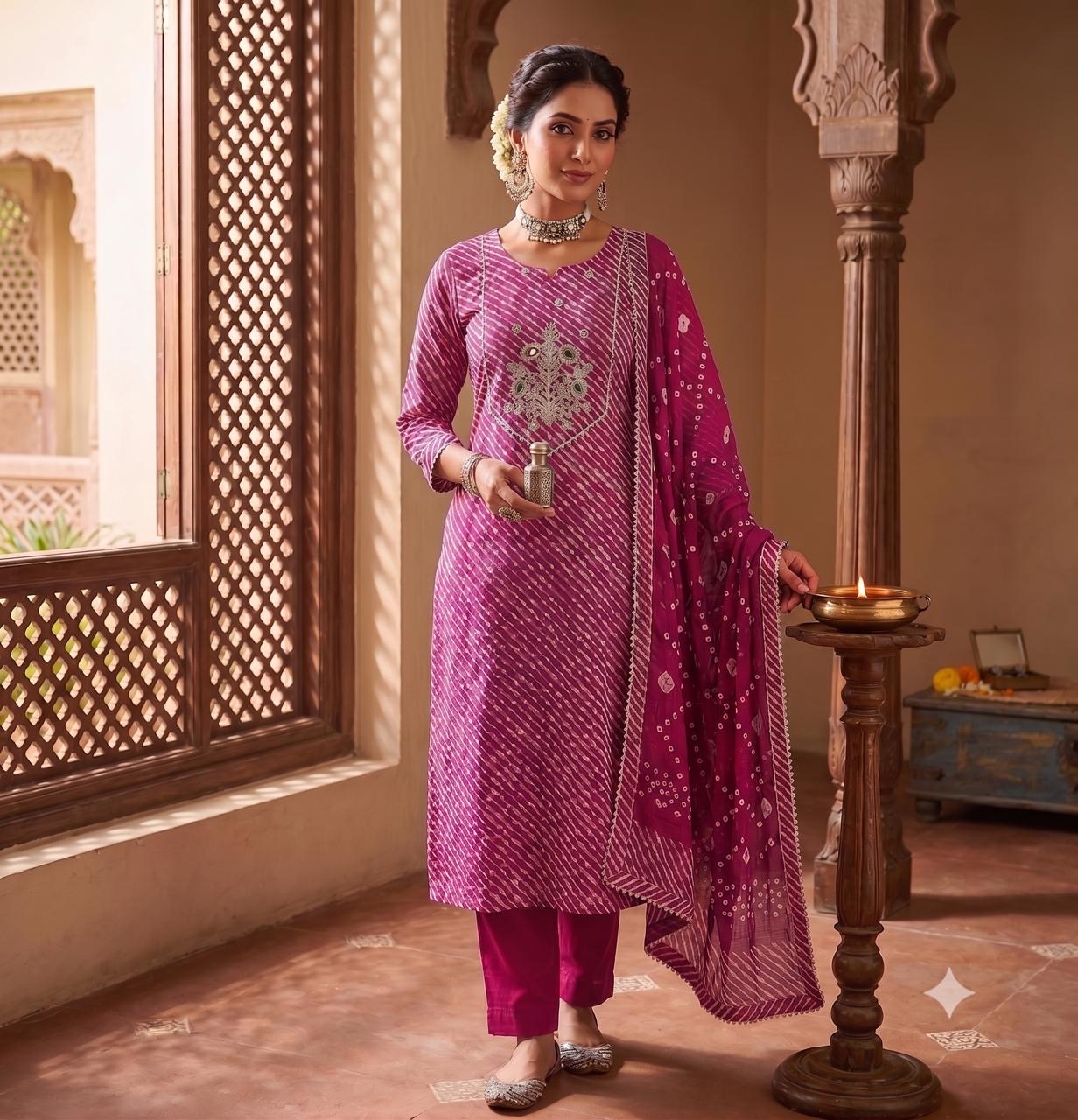
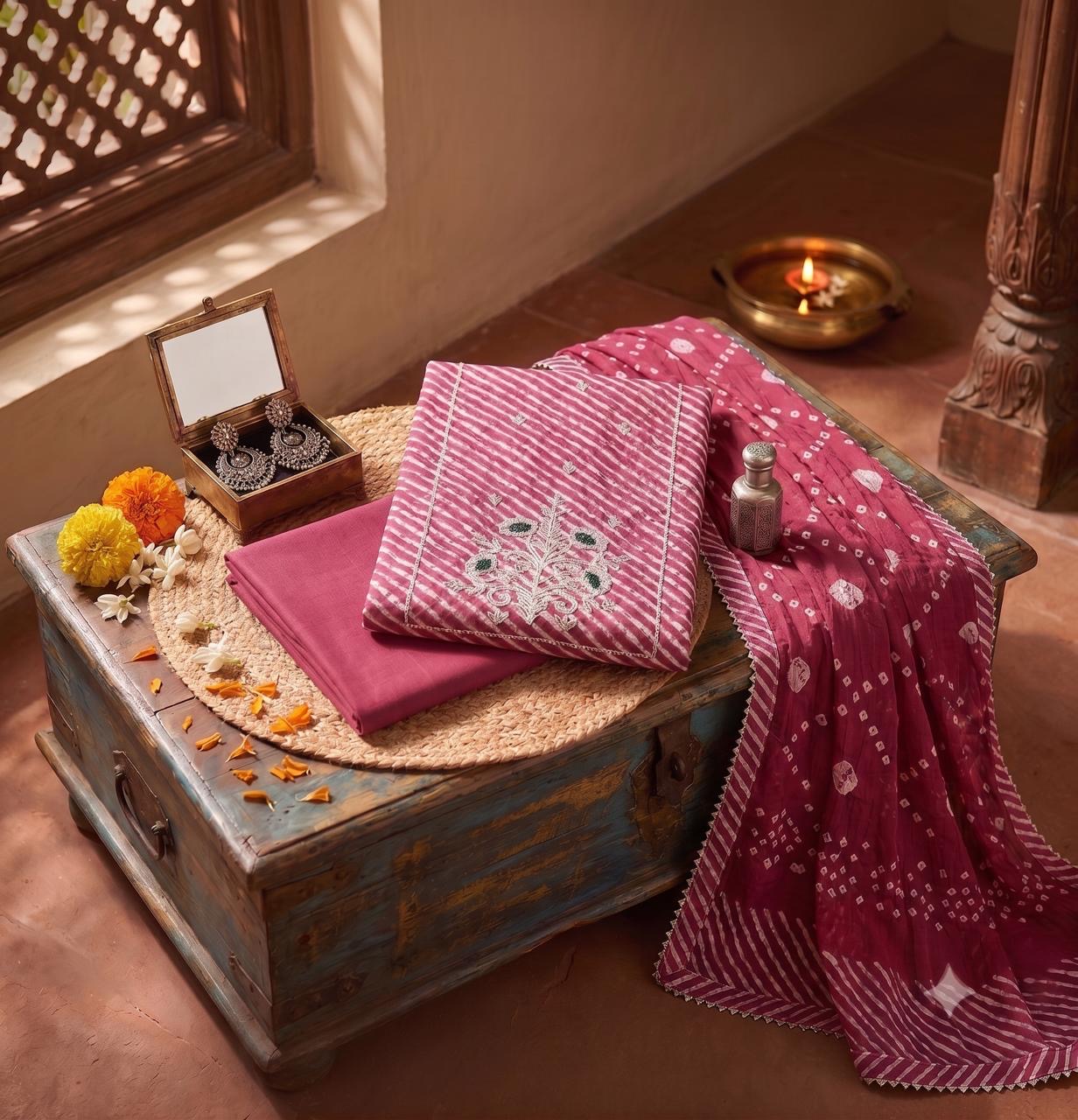
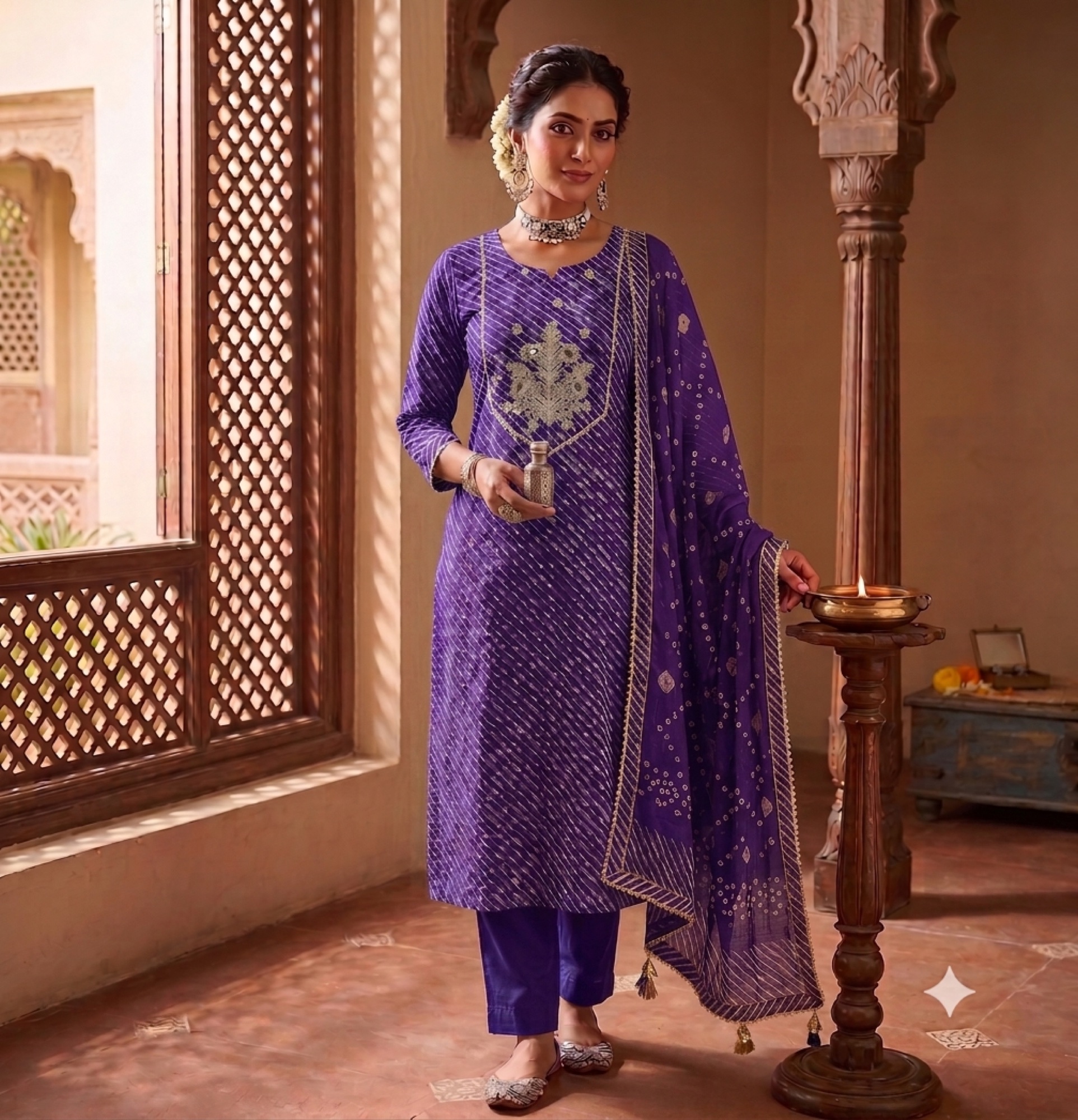
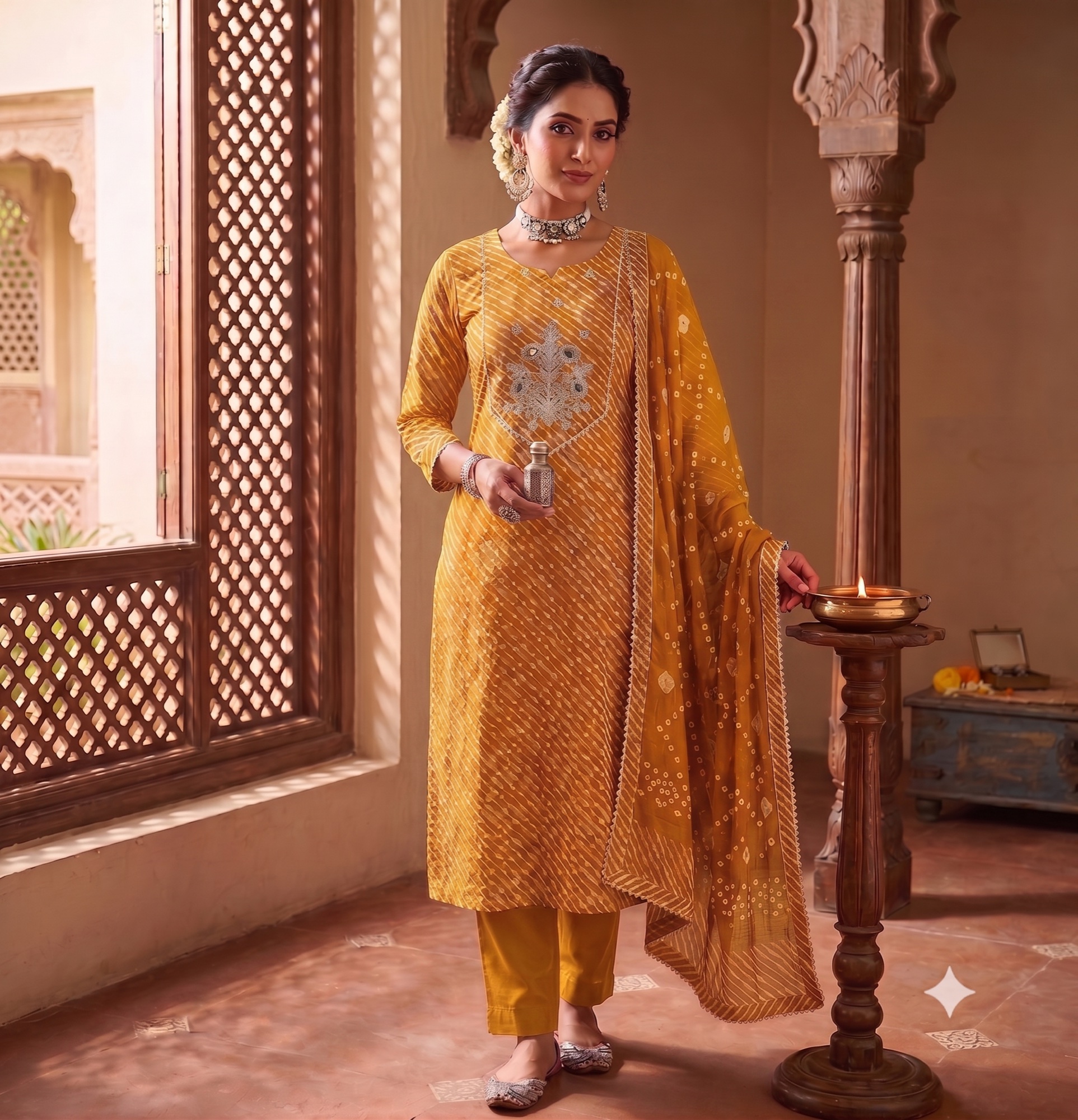
White currents travel diagonally across midnight, gulabi, amethyst and marigold—four moods of the same Jaipur rhythm. A centred botanical motif lends ceremonial stillness to the easy kurta, while the dotted dupatta deepens the dialogue between leheriya line and bandhani constellation.
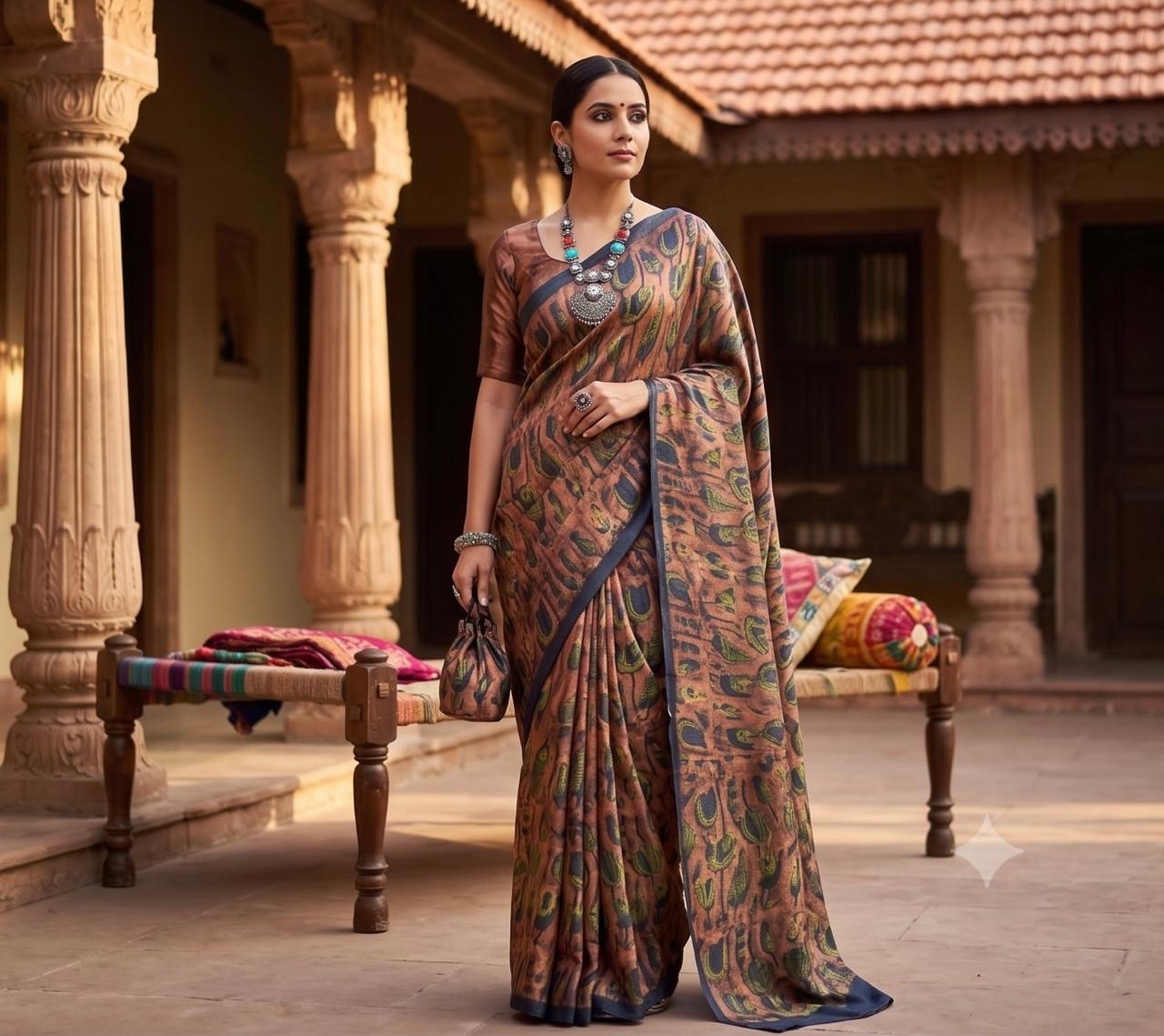
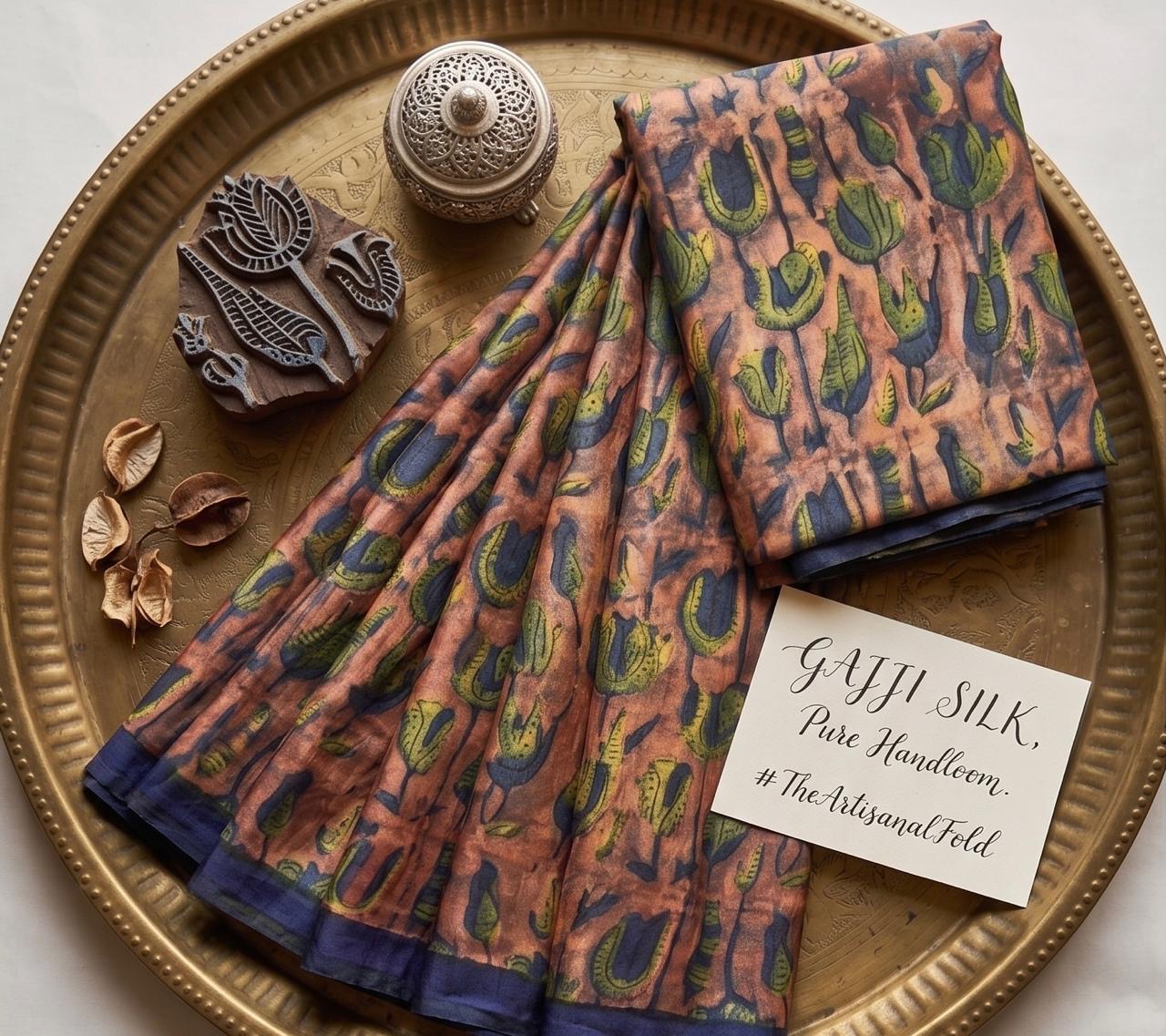
On burnished Gajji silk, tulips rise with the looseness of an artist's first mark—indigo, moss and charcoal held against a field of old rose. The deep border steadies the painterly surface, allowing the saree to move between heirloom gravity and unstudied ease.
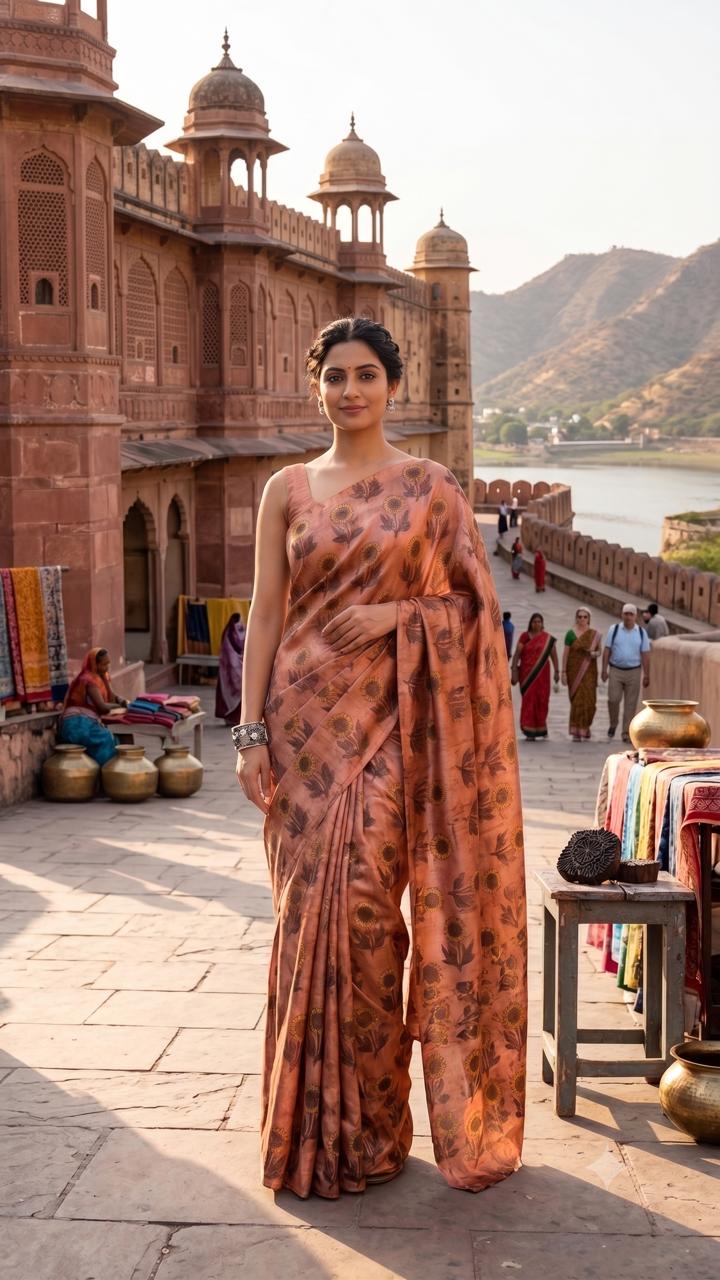
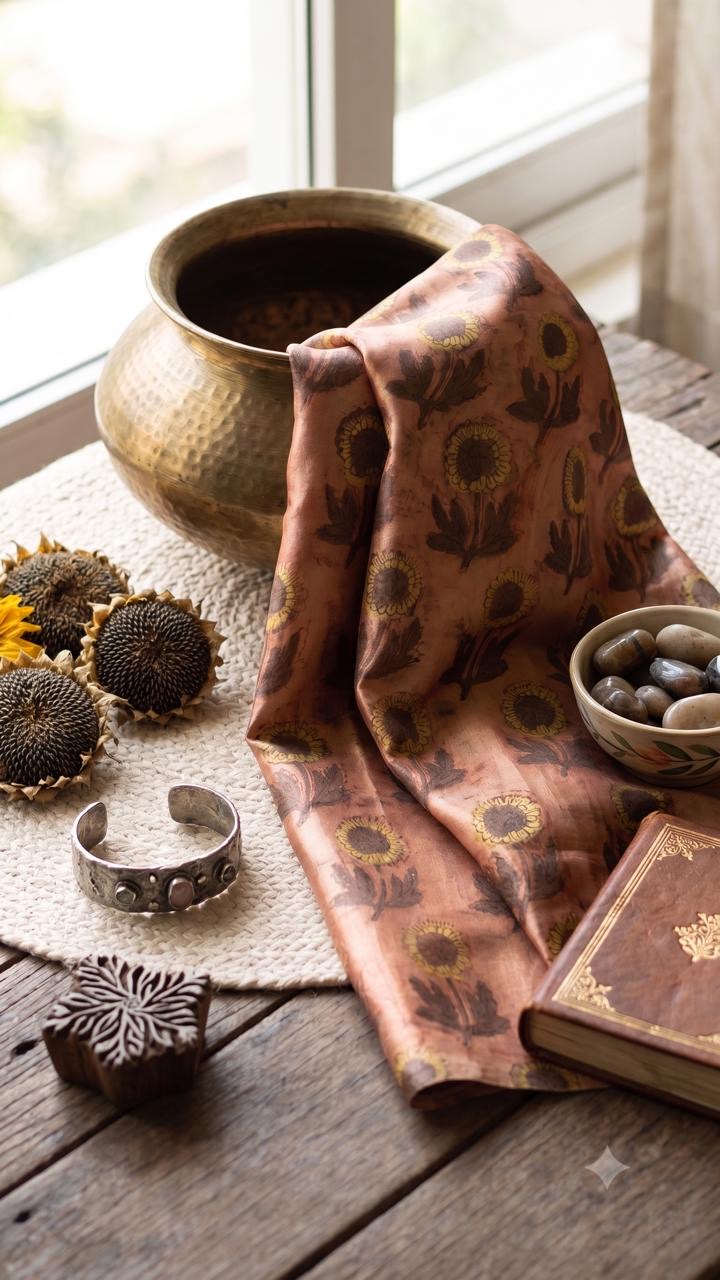
Sunflowers are translated into small hand-drawn suns across a warm madder ground. The silk catches Jaipur's late light with a muted glow rather than shine, its fluid drape carrying the intimate charm of a botanical folio into a quietly commanding saree.
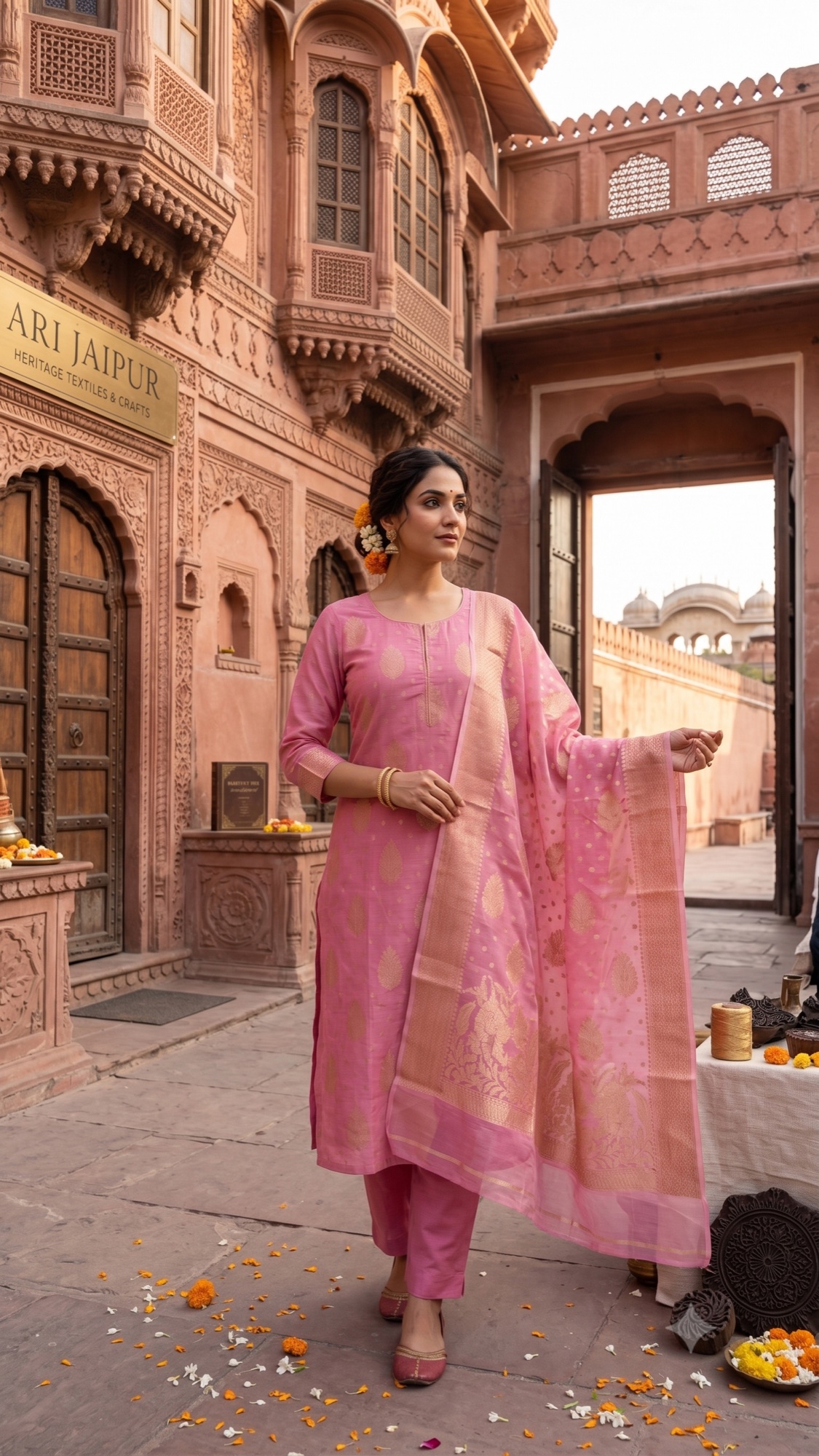
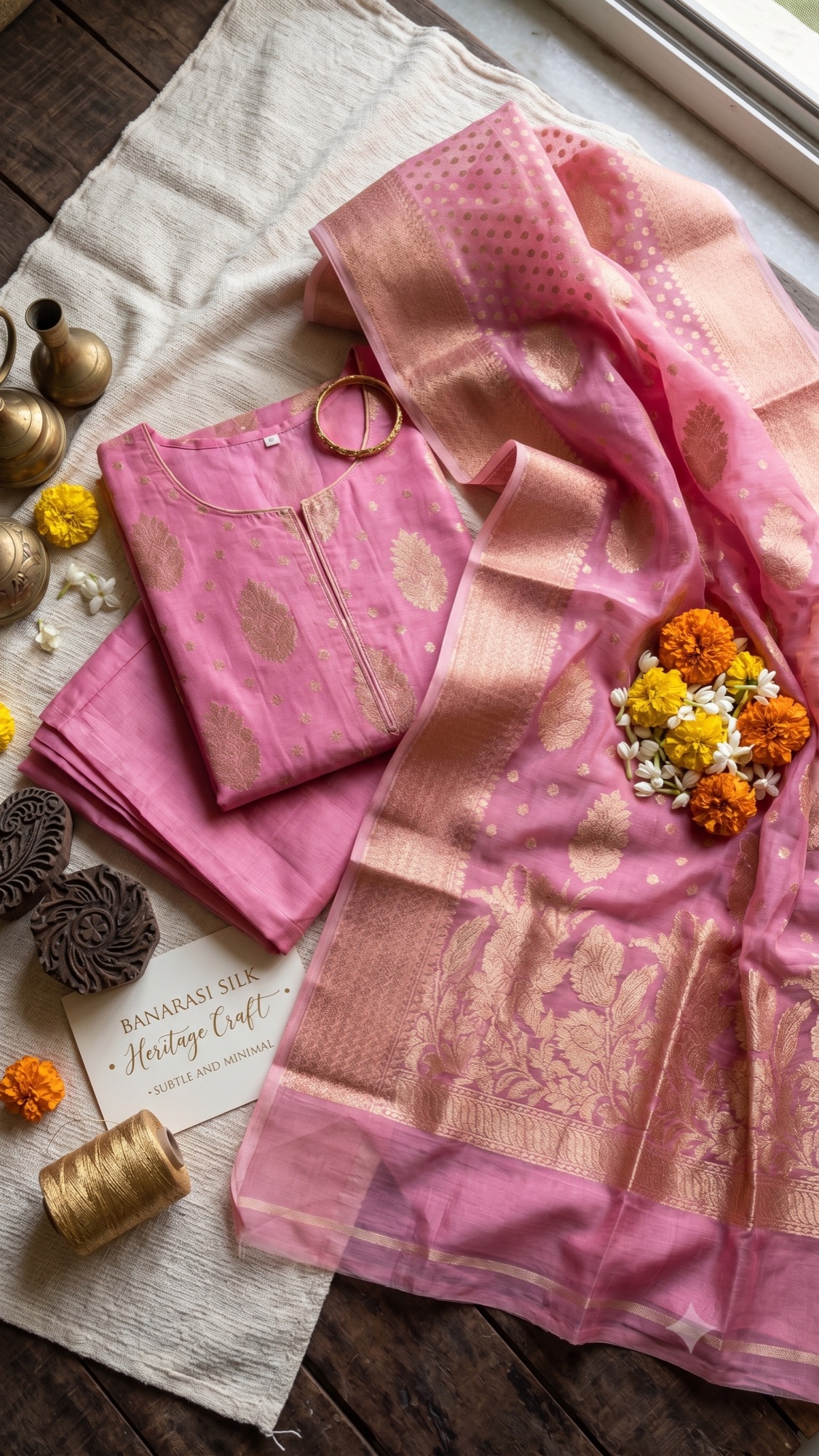
Gulabi silk meets the measured radiance of Banaras. Gold butis rest across the kurta like small votive leaves, while the dupatta opens into a generous floral border—softly ceremonial, luminous without excess, and made for afternoons that become occasions.
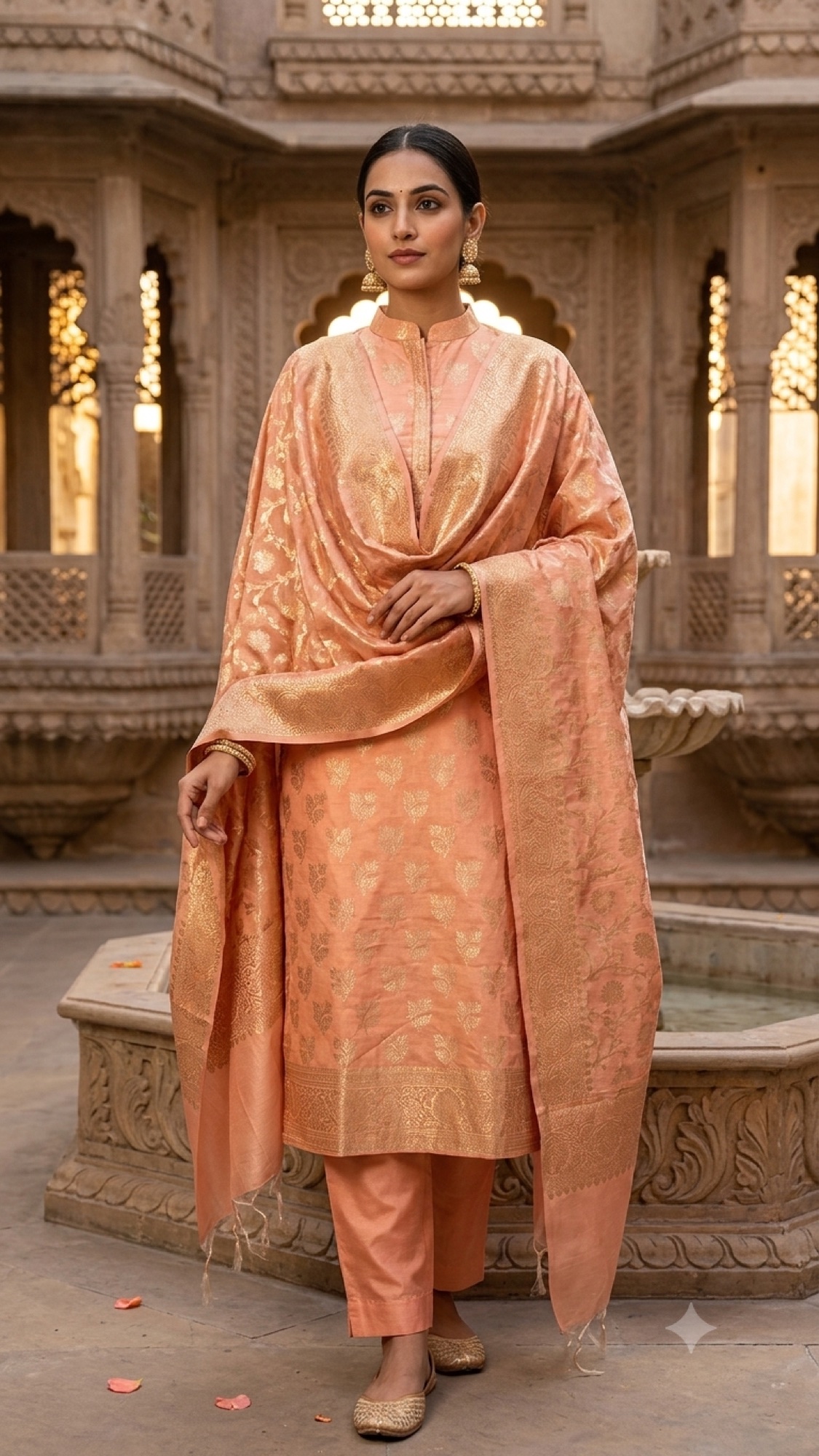
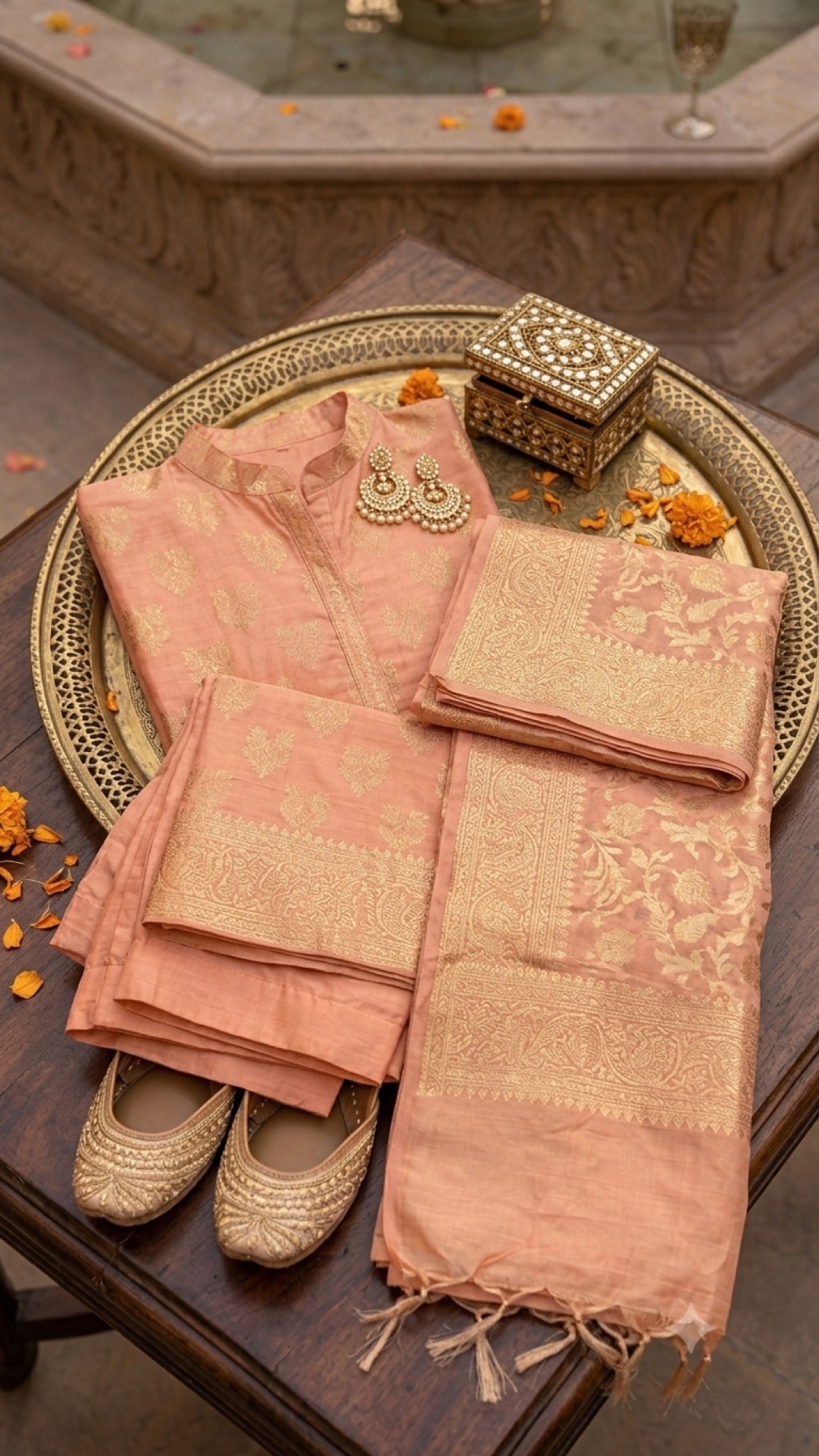
Peach is held here at the exact hour before gold. The Banarasi surface carries tiny woven leaves, and the broad dupatta border gathers paisley and vine into a quiet frame. Against carved stone, the ensemble feels less adorned than illuminated.
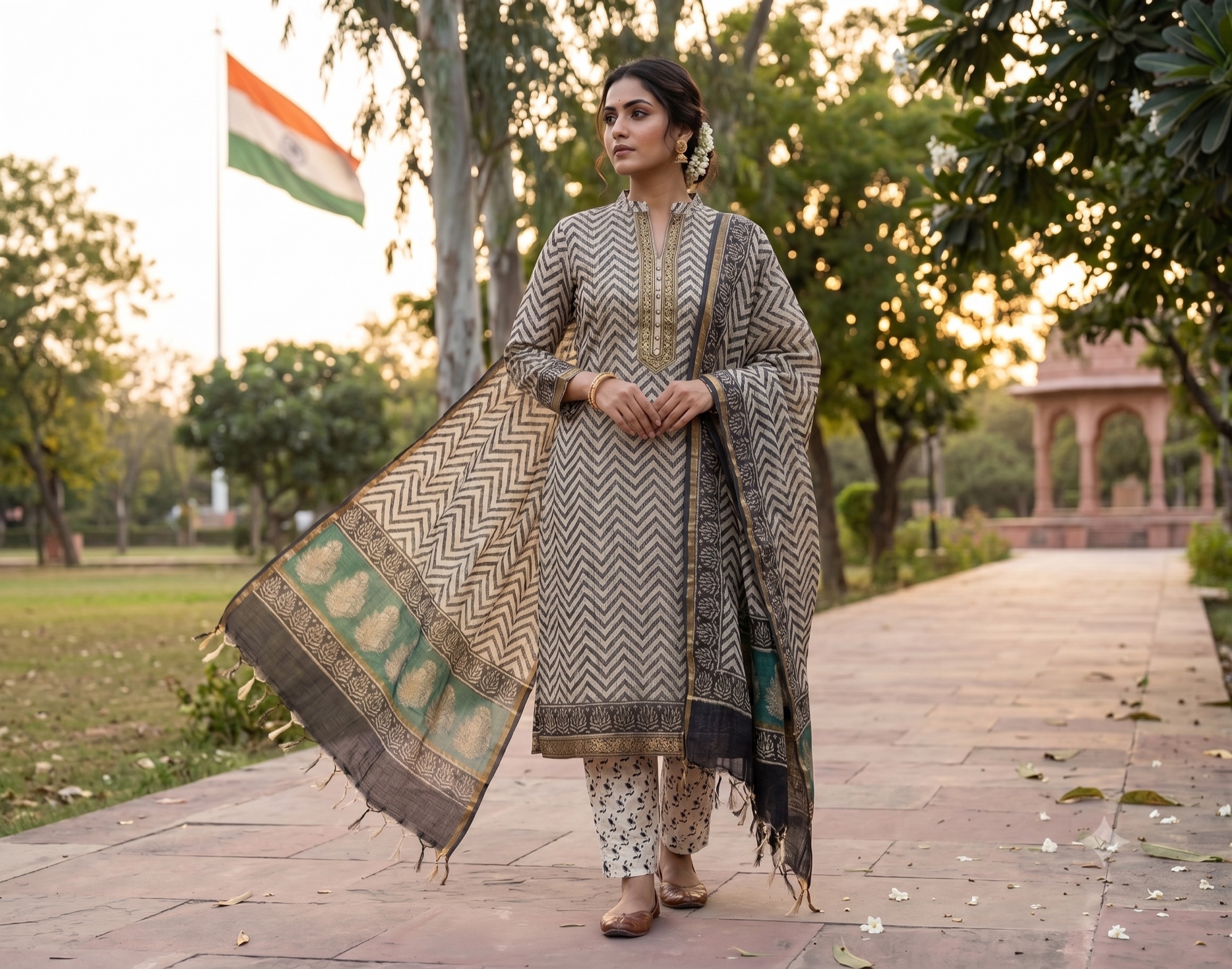
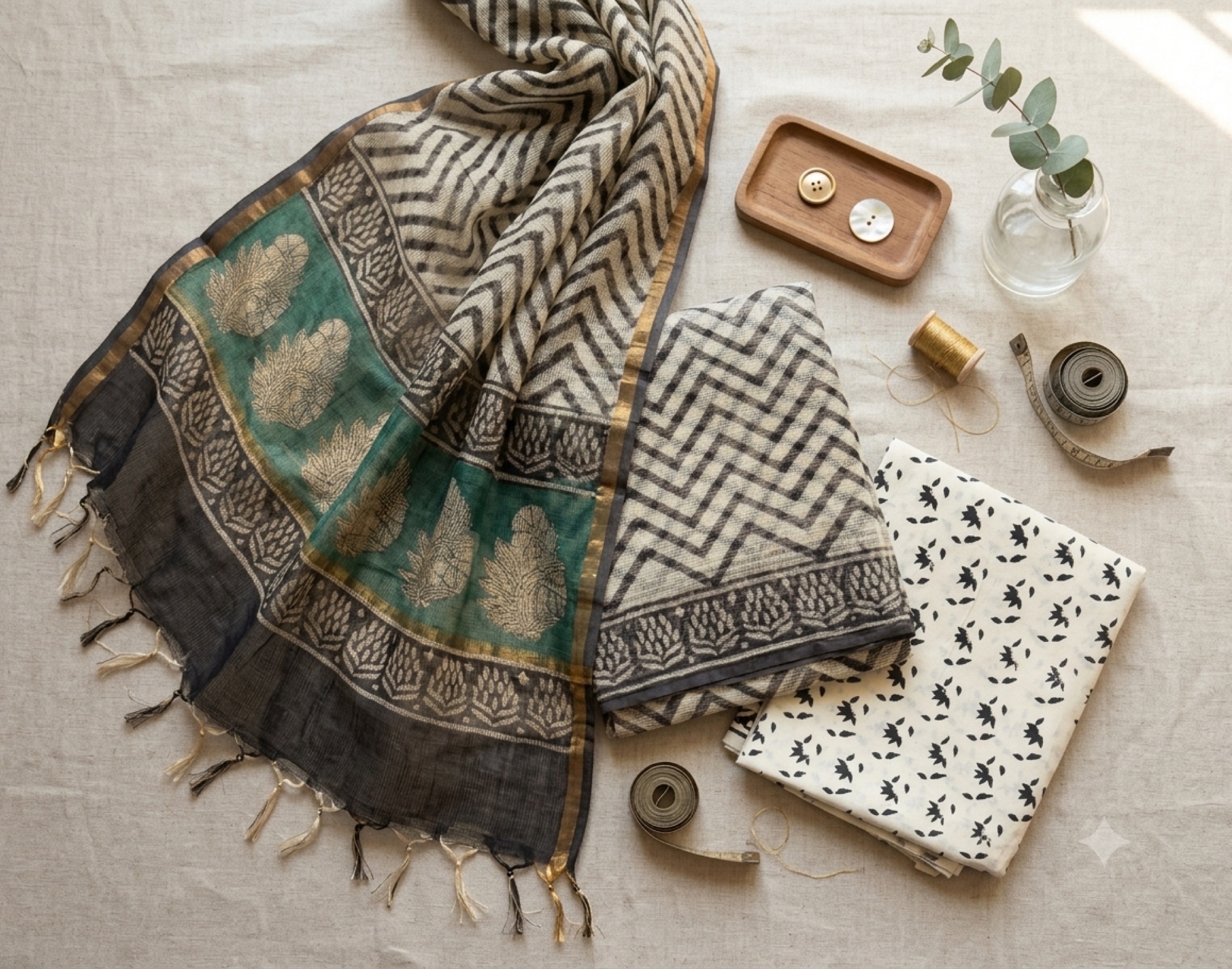
Charcoal chevrons move with architectural precision until an emerald panel interrupts the rhythm—lotus forms glinting in muted gold. The small floral trouser print loosens the geometry, giving the set the composed ease of a garden promenade at dusk.
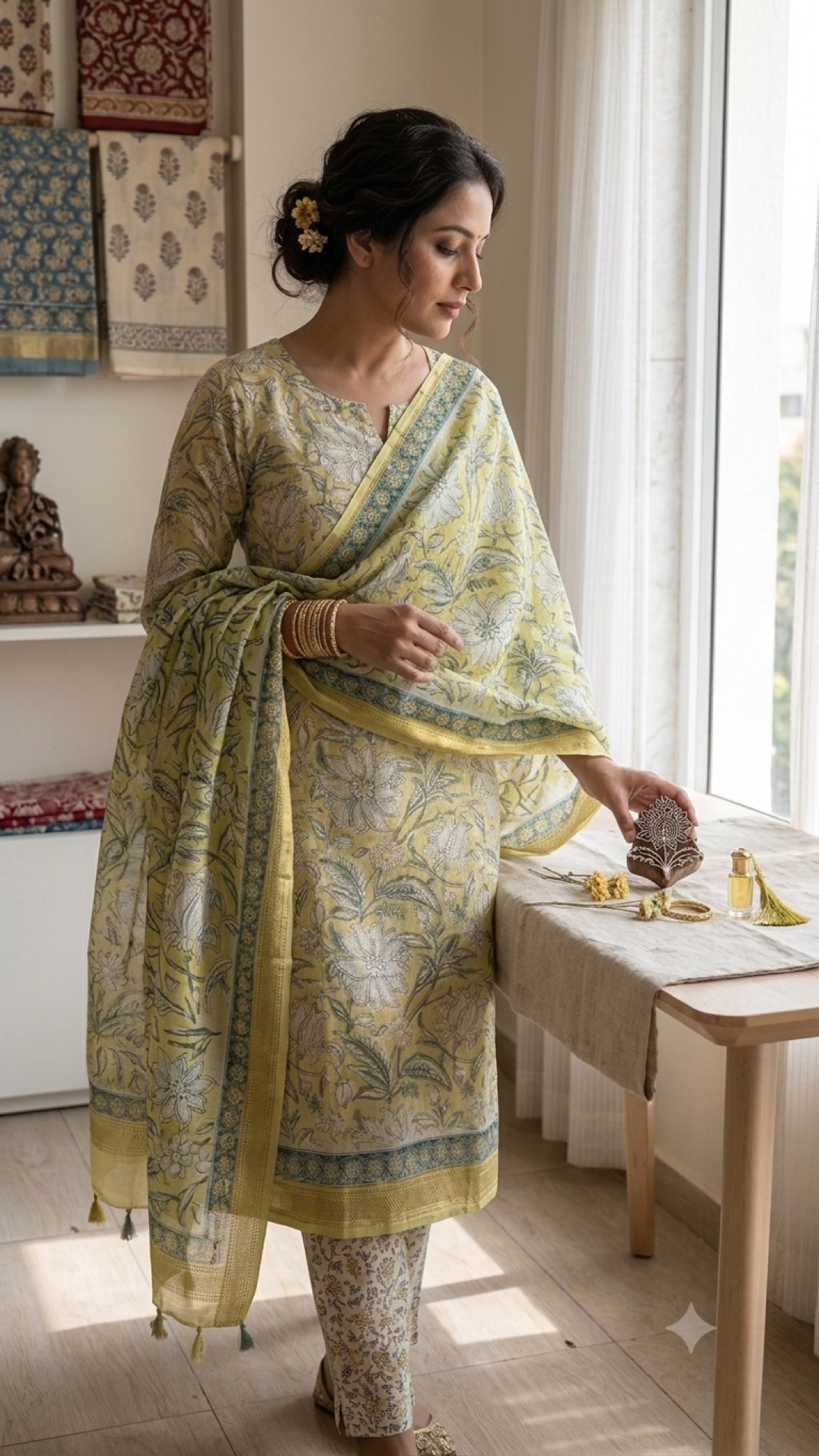
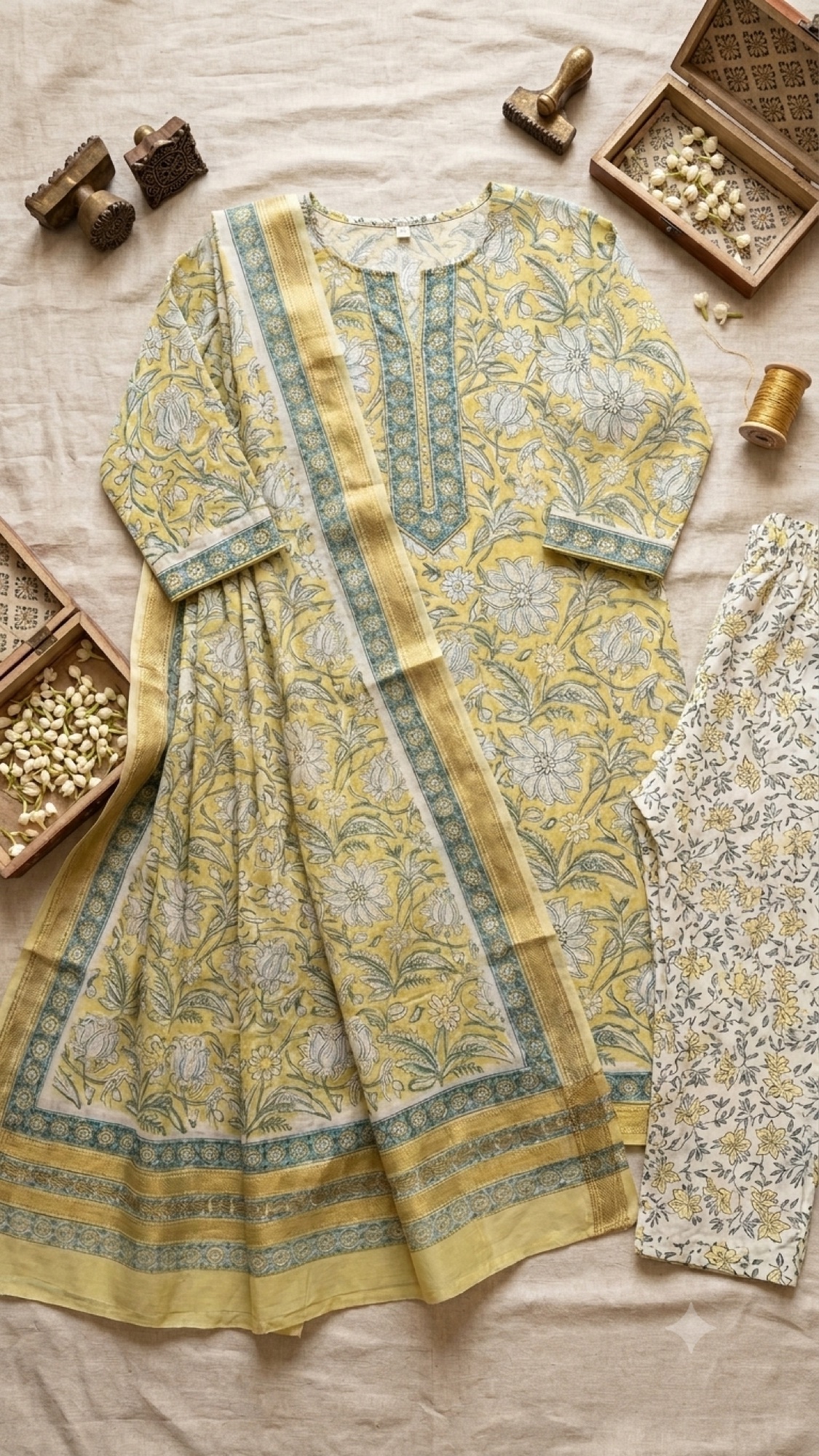
Basant yellow is drawn over with a garden in fine grey line, every stem given room to breathe. Teal borders and a measured stroke of gold frame the abundance, while the contrasting trousers turn the ensemble into a study of bloom, shadow and spring light.
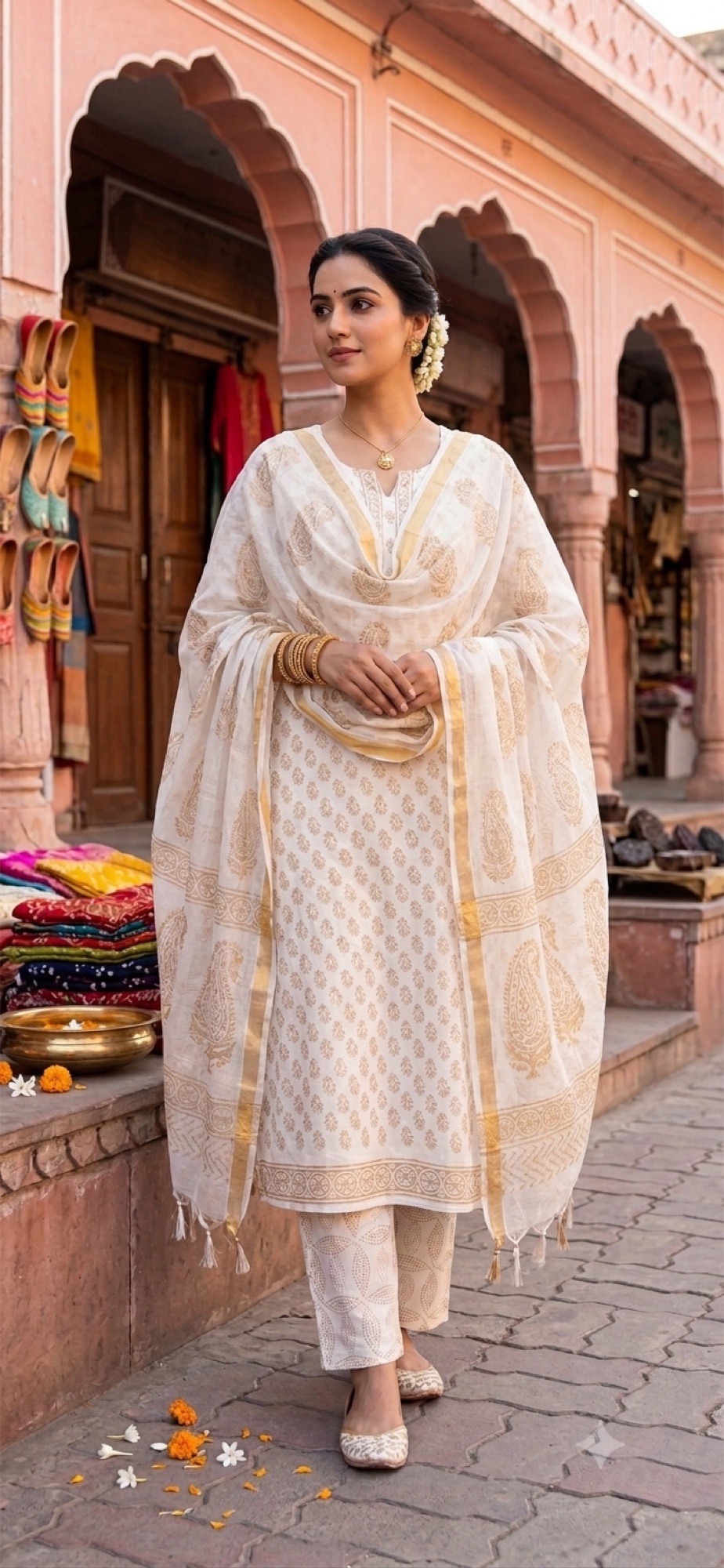
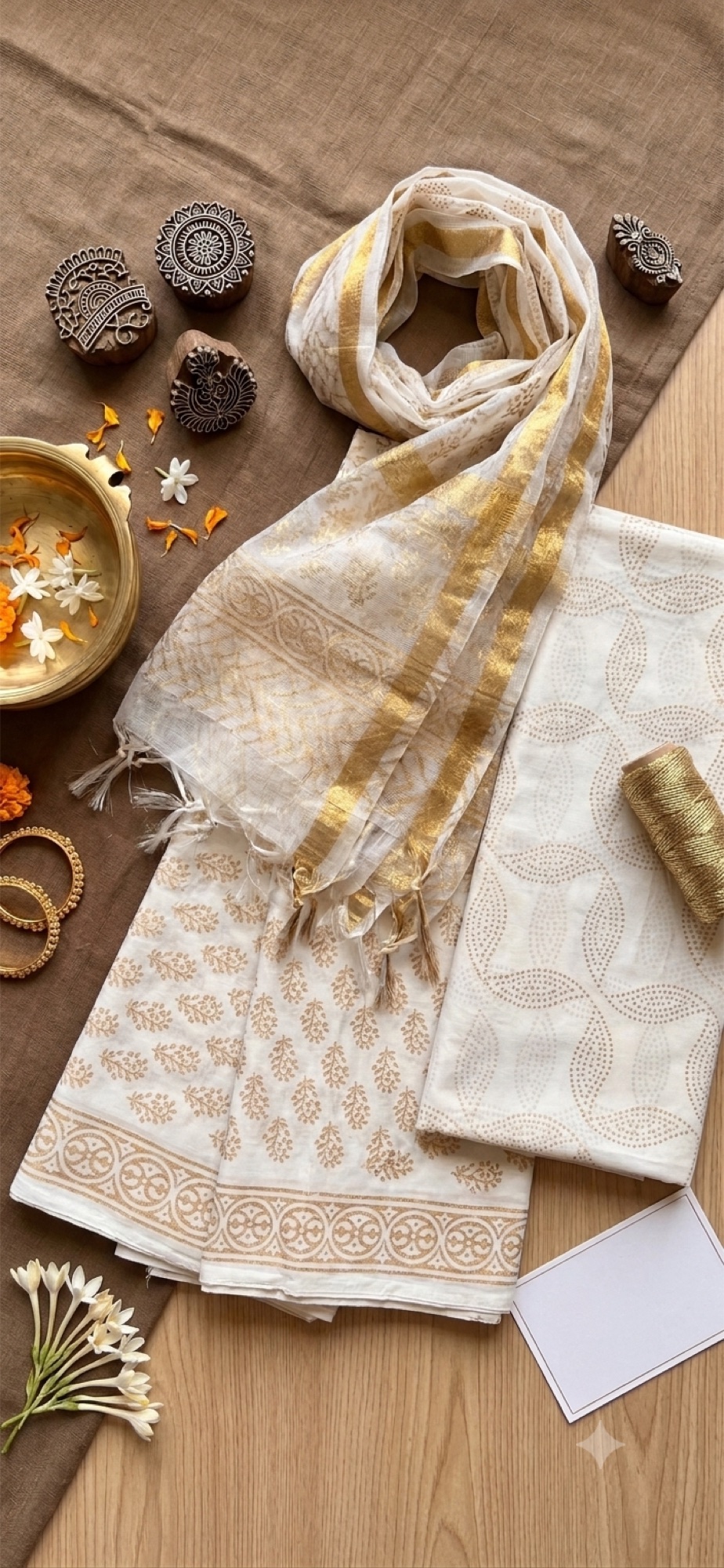
Ivory becomes a field for the faintest gold: small sprigs, generous paisleys and a border that catches light only when the cloth moves. The restraint is deliberate—the quiet assurance of hand print and metallic line allowed to speak in their own time.
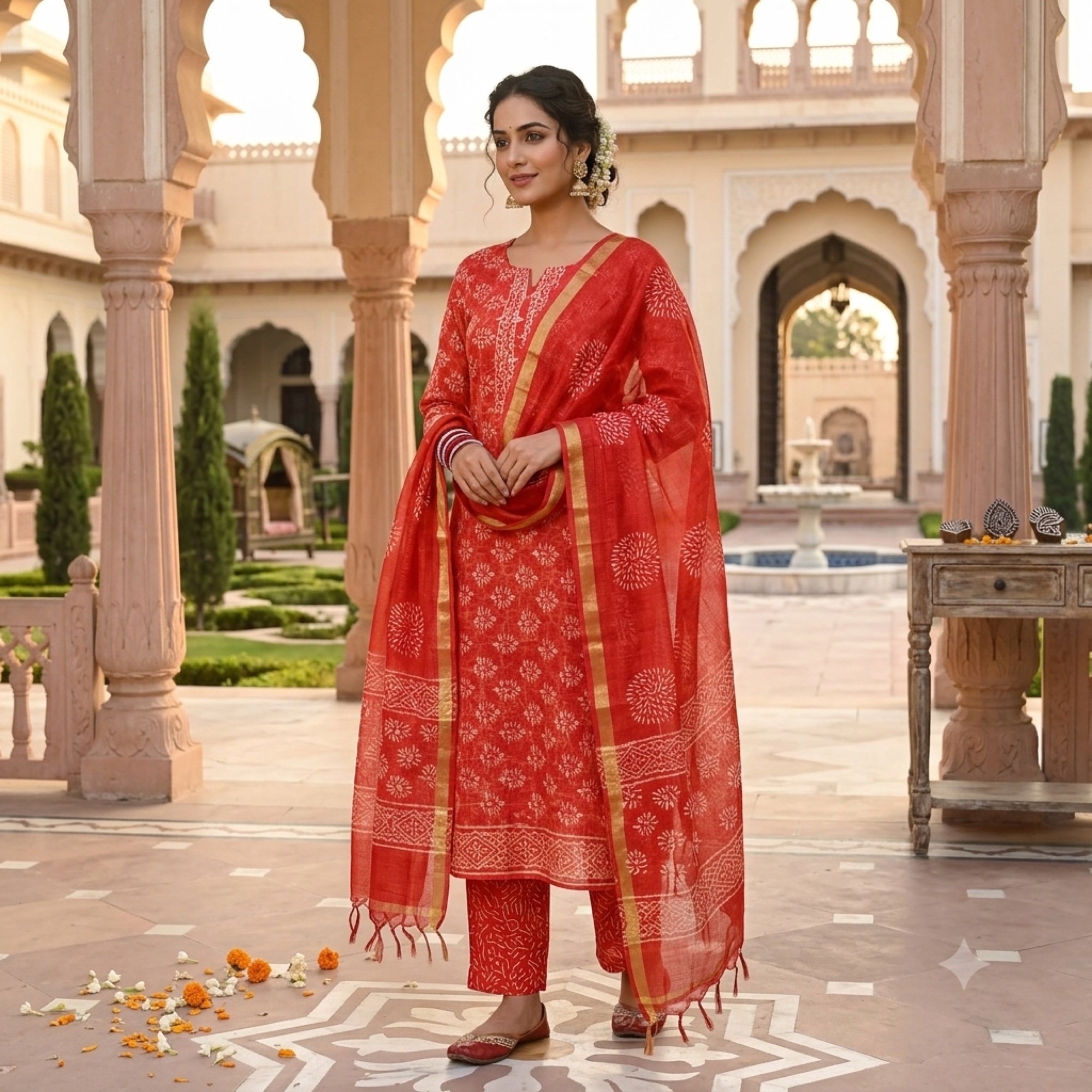
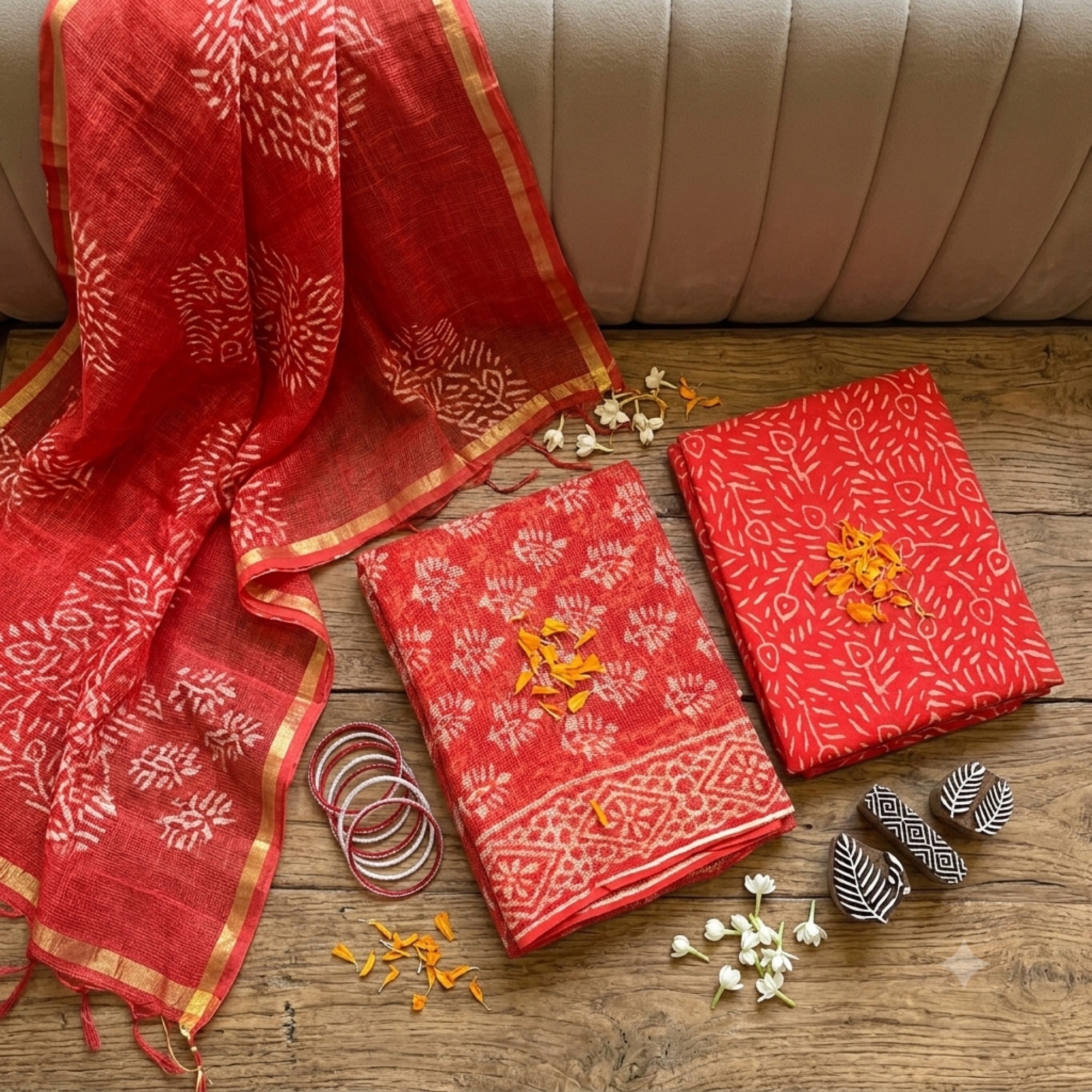
Vermilion enters the courtyard with festival clarity. White floral marks hold the visible memory of resist and block, repeated across kurta, trouser and weightless dupatta; a fine gold edge gathers the composition into one radiant, unbroken line.
Notes on cloth, hand & time
An evolving archive of Jaipur's textile languages—and the people, processes and modern forms that keep them alive.
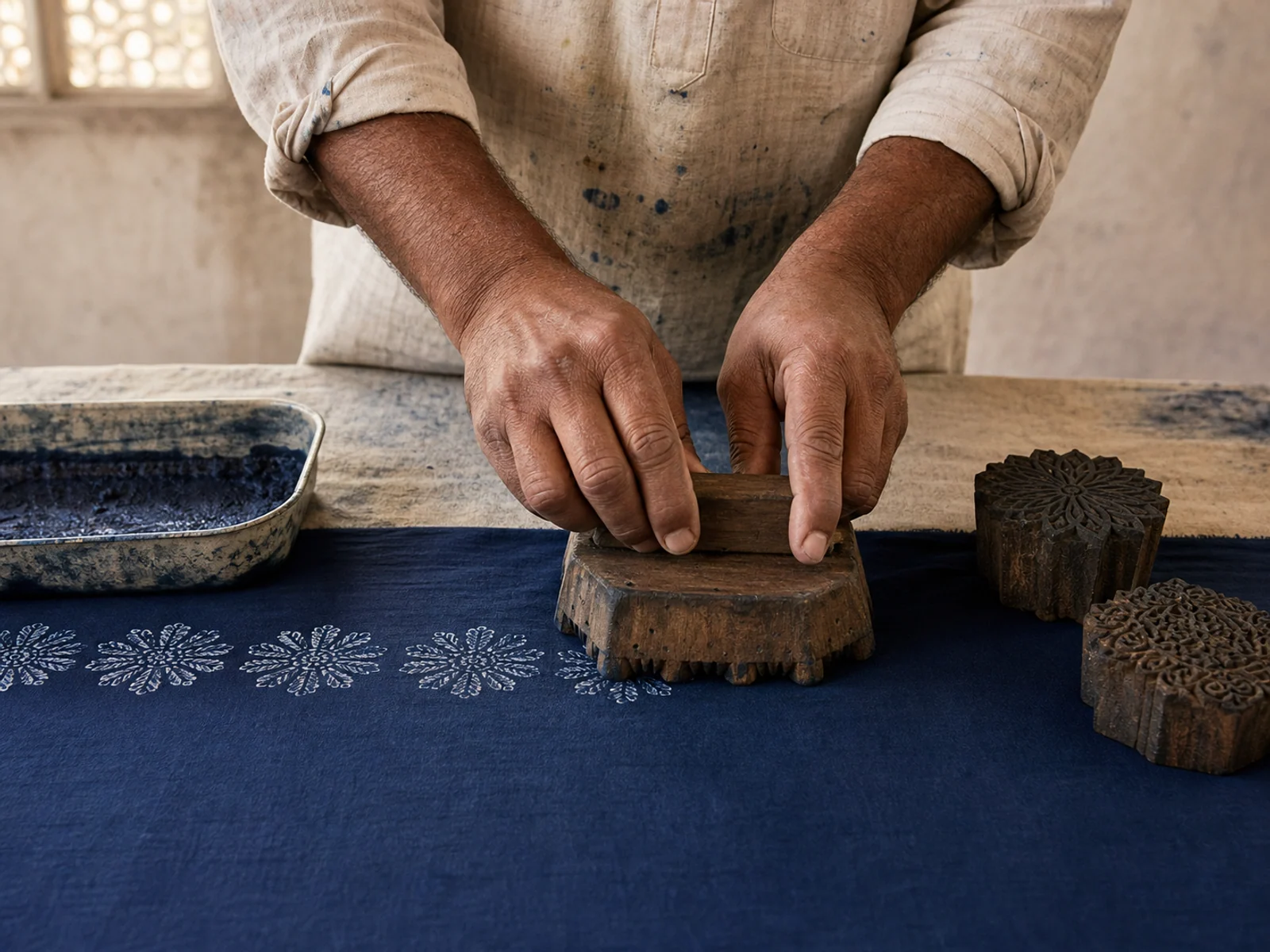 Craft Processes · 8 min
From carved block to final wash, follow the patient sequence behind cloth made by hand.
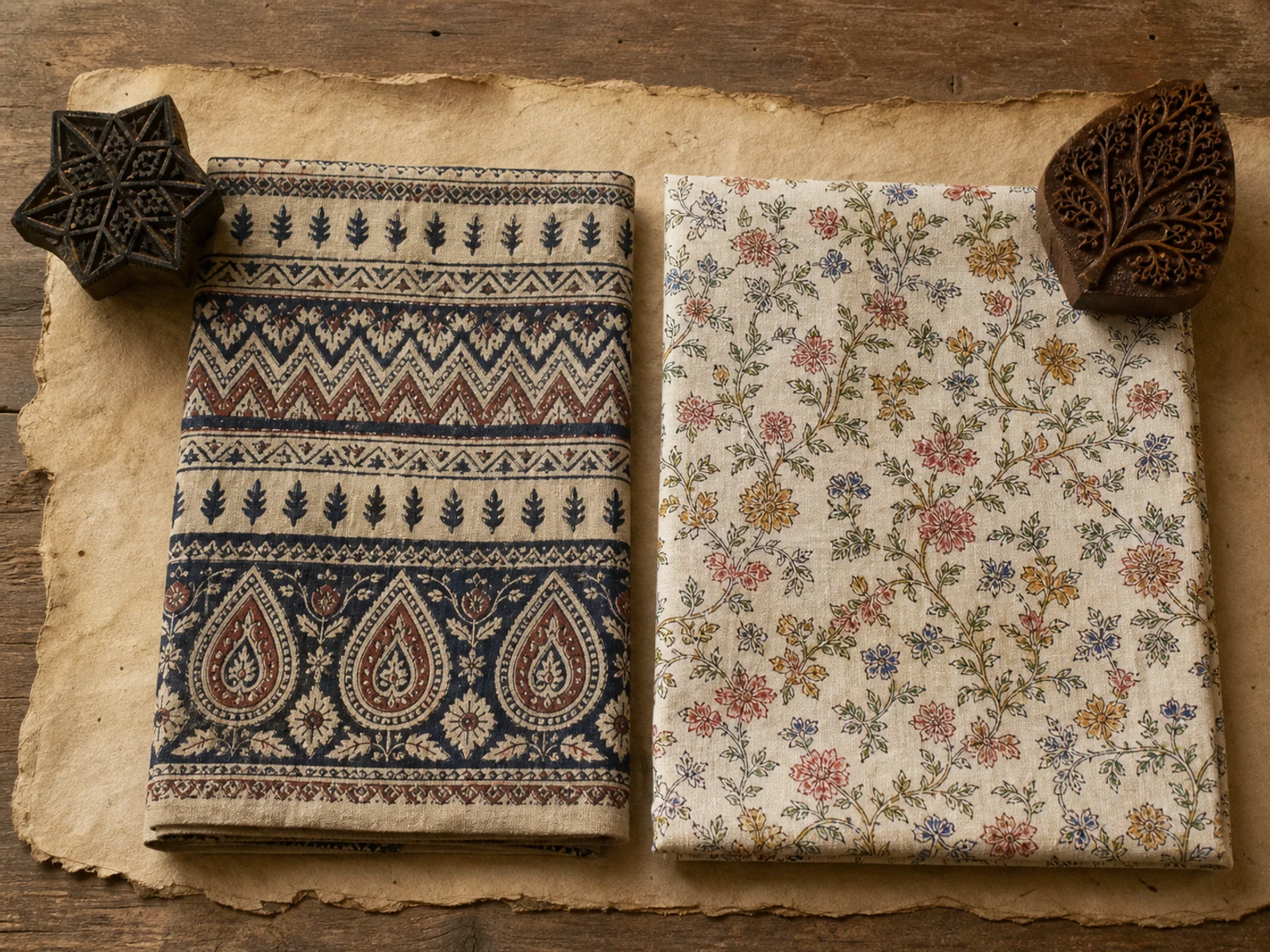 Craft Processes · 7 min
Learn to read the palette, motif and process of Jaipur's two celebrated print centres.
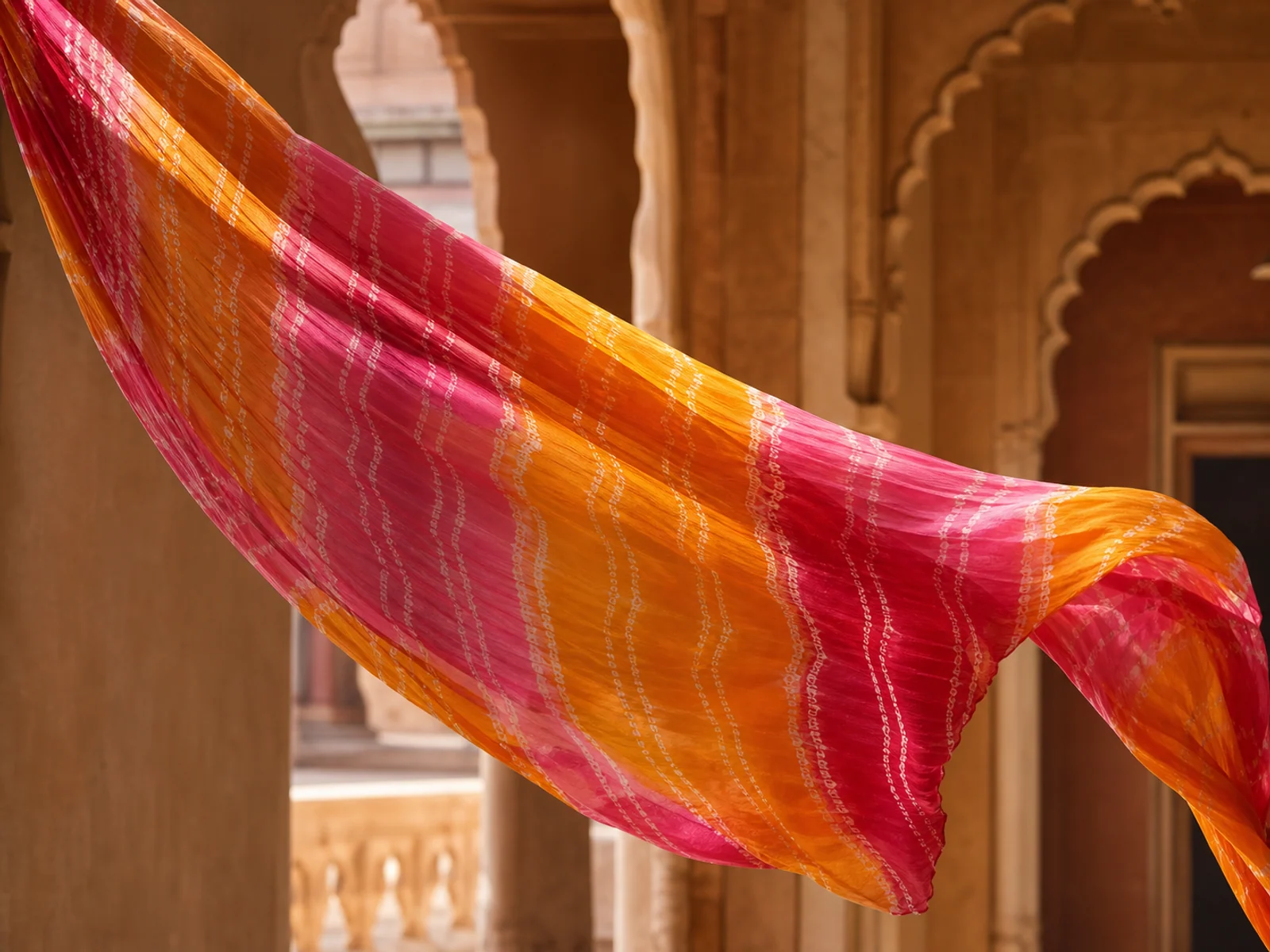 Textile Stories · 6 min
How diagonal folds, fine ties and saturated colour create a monsoon rhythm.
A Note from the Atelier
“Nothing truly timeless is hurried.”
Each Tridha piece is finished in considered numbers. Speak with our Jaipur atelier for availability, measurements and personal tailoring; we will guide you from first enquiry to final fitting.