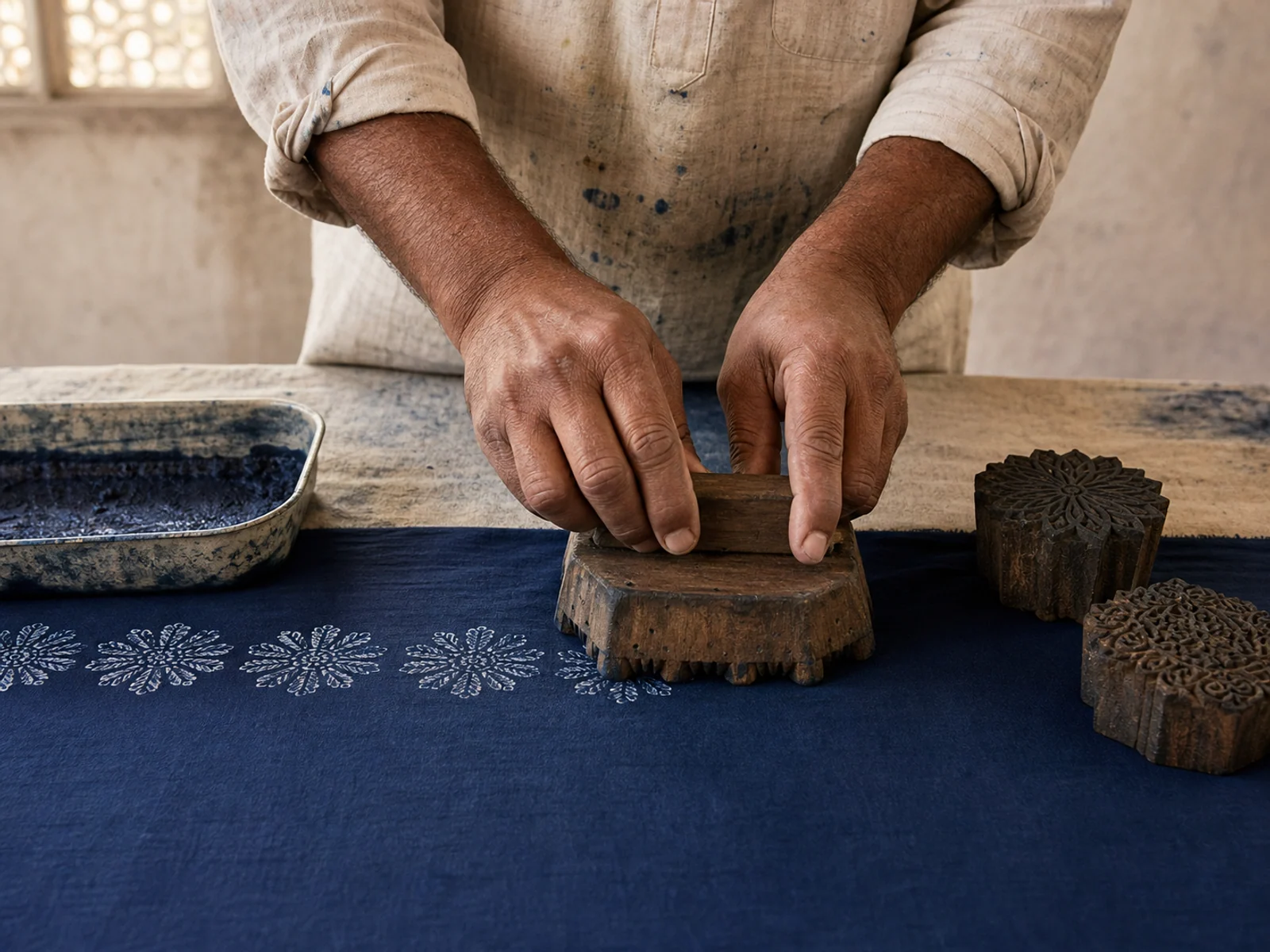
Hand block printing is both a method and a tempo. A pattern is not transferred in a single pass: it is built impression by impression, colour by colour, with the printer’s eye constantly correcting pressure, alignment and rhythm. Around Jaipur, the celebrated centres of Sanganer and Bagru developed distinct visual languages from the same elemental grammar of cloth, carved wood, colour and water.
“The hand is visible not in one perfect mark, but in the rhythm carried across the cloth.”
The making sequence
The cloth is first prepared so that starch, oils and surface impurities do not interfere with colour. A design is drawn, transferred to seasoned wood and carved in relief. The printer loads the block from a dye tray, places it against the cloth and strikes or presses it evenly. Registration marks help the next impression meet the last.
A multi-colour design may use an outline block, one or more filling blocks and a separate border. Between stages the cloth can be dried, washed, steamed or returned to a dye bath. The exact sequence changes with the printing tradition and dyestuff, but patience is constant.
Why every metre is subtly different
Pressure changes as the printer moves along the table. Dye gathers differently at an edge. A joint may drift by a few millimetres before being brought back into rhythm. These minute variations create the lively surface collectors value in authentic hand work.
Machine printing aims for identical repetition. Hand printing carries repetition with memory: the block is the same, but every placement records a human action.
From heritage cloth to modern form
The most respectful contemporary design does not treat heritage printing as costume. Scale, placement and silhouette can change while the logic of the craft remains visible. At Tridha, a geometric Dabu field may be balanced by a clean kurta line, while a Sanganeri-style buti is given room to breathe on translucent Chanderi.
Frequently asked
How can I tell if fabric is hand block printed?
Look for gentle shifts in alignment, colour density and pressure, plus occasional overlap at motif edges. The reverse of the cloth may also show dye penetration, depending on the technique.
Is all Jaipur print made with natural dyes?
No. Jaipur workshops use natural, synthetic and mixed dye systems. A responsible seller should describe the process specifically rather than using ‘natural’ as a blanket claim.