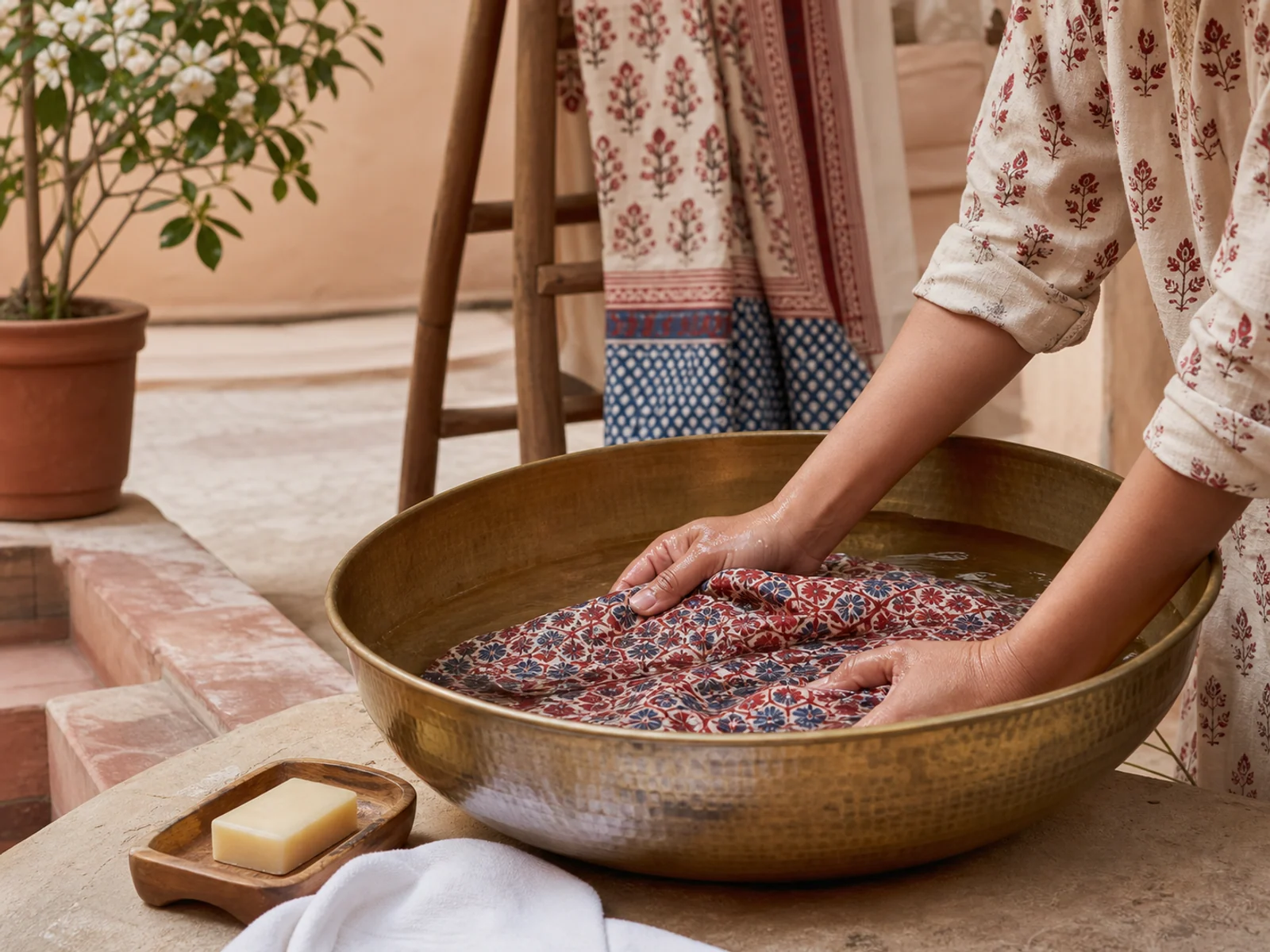
Good care protects colour without trying to freeze cloth in time. Hand-printed cotton may soften; indigo may release a little surface colour; silk and zari require more specialised handling. Begin with the garment’s own label, then use the gentlest method appropriate to its fibre and embellishment.
“The hand is visible not in one perfect mark, but in the rhythm carried across the cloth.”
For hand-printed cotton
Turn the garment inside out. Wash separately in cold water with a small amount of pH-neutral detergent, either by hand or on a very gentle short cycle if the label permits. Do not soak for long, wring hard or use bleach. Dry in shade and iron on the reverse at a suitable cotton temperature.
For indigo and natural-dye pieces
Some crocking or surface colour release can occur in early washes. Keep the piece away from pale upholstery while damp, wash separately and avoid acid or alkaline home remedies unless the maker specifically recommends them. Strong sun can shift colour quickly.
For silk, zari and embroidery
Professional dry cleaning is normally safest. Mention metallic yarn, hand painting and resist dye to the cleaner. Store only when fully dry, with breathable cotton or acid-free tissue; avoid plastic for long-term storage.
Frequently asked
Can block print clothes go in a washing machine?
Some cotton garments can on a cold delicate cycle, but hand washing is gentler. Always follow the specific care label.
Why is colour coming out in the first wash?
A little loose surface dye can release from deeply coloured handmade textiles. Heavy or continuing bleeding should be discussed with the seller.