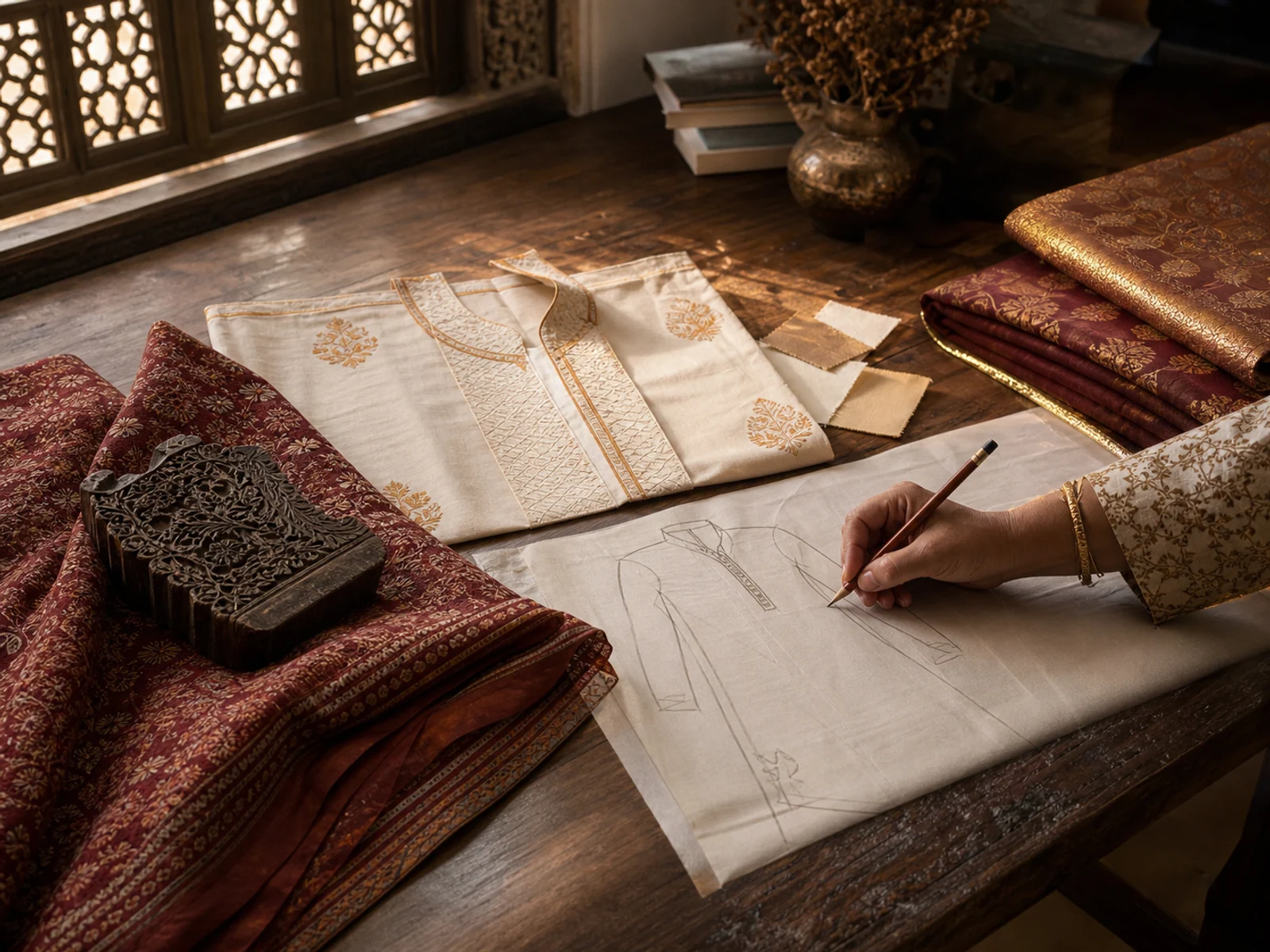
Tridha means threefold. For the atelier, those three movements are woven heritage, modern form and timeless legacy. They are not separate themes added after a garment is designed; they are the questions used to decide fabric, proportion, embellishment and what should be left untouched.
“The hand is visible not in one perfect mark, but in the rhythm carried across the cloth.”
Begin with the cloth
A fluid Gajji silk asks for a different line from hand-spun linen-cotton. A small Sanganeri buti needs air; a Dabu field benefits from a silhouette with restraint. Design begins by listening to the textile rather than forcing every cloth into one house shape.
Edit until the hand can be seen
Embellishment is used to frame craft, not compete with it. A metallic edge may catch the line of a jharokha; embroidery may deepen one botanical contour. The quieter the intervention, the easier it is to see block, weave, brush and resist.
Make for a life beyond the photograph
A Tridha piece is intended to move through rooms, seasons and generations. Tailoring, comfort and the ability to restyle matter as much as the first image. Timelessness is not neutrality—it is enough character to be remembered, held in a form that remains wearable.
Frequently asked
Where is Tridha Couture based?
Tridha Couture is rooted in Jaipur, Rajasthan, and works through an atelier enquiry model.
Can Tridha pieces be tailored?
Availability and personal tailoring can be discussed directly with the Jaipur atelier via WhatsApp.