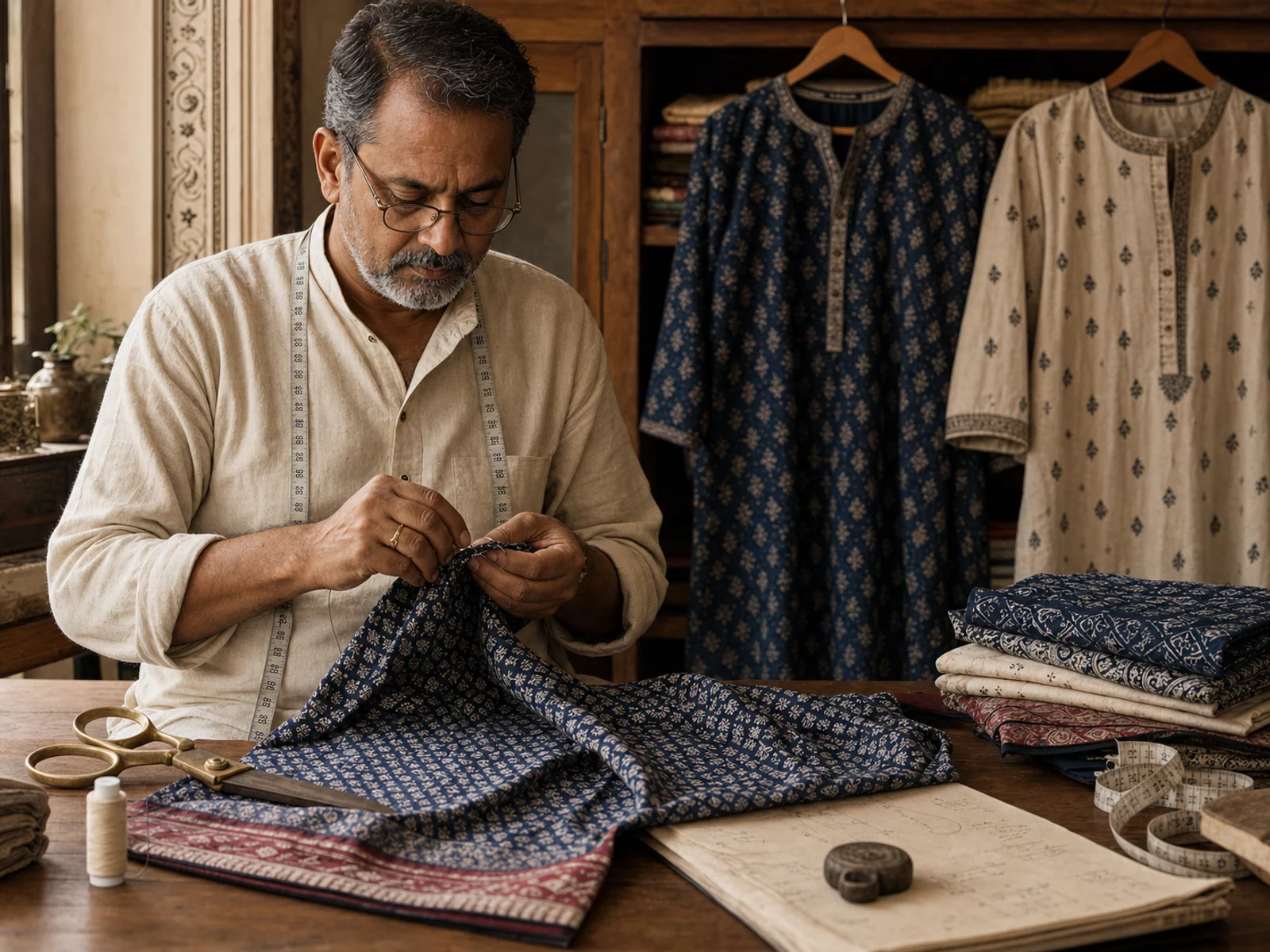
Slow fashion is not a colour palette or a photograph of a wooden block. It is a set of decisions: how much is made, how clearly processes are described, whether fibres and care are disclosed, whether the garment can be repaired and whether the owner intends to wear it repeatedly. Craft can support slowness, but only when the whole lifecycle is considered.
“The hand is visible not in one perfect mark, but in the rhythm carried across the cloth.”
Replace labels with questions
Instead of accepting ‘eco-friendly’, ask which fibre, which dye system, where the cloth was printed and how the garment was finished. Ask whether production is made to order or held in limited runs, and what tailoring or repair support exists.
Buy for repetition
The most sustainable garment in a wardrobe is often the one repeatedly worn and carefully maintained. Prioritise a comfortable silhouette, useful colour relationships and enough seam allowance or tailoring support to adapt fit over time.
Value the human time
Hand processes are labour-intensive. Their variations should be understood, the maker’s vocabulary used accurately and unrealistic speed avoided. A slower purchase can make room for better questions and a stronger relationship with the piece.
Frequently asked
Is handmade clothing always sustainable?
No. Handmade describes production, not the entire environmental or labour impact. Fibre, dyes, wages, transport, durability and care all matter.
What is the best slow-fashion buying habit?
Buy fewer pieces with excellent fit and clear care guidance, then wear, repair and restyle them often.