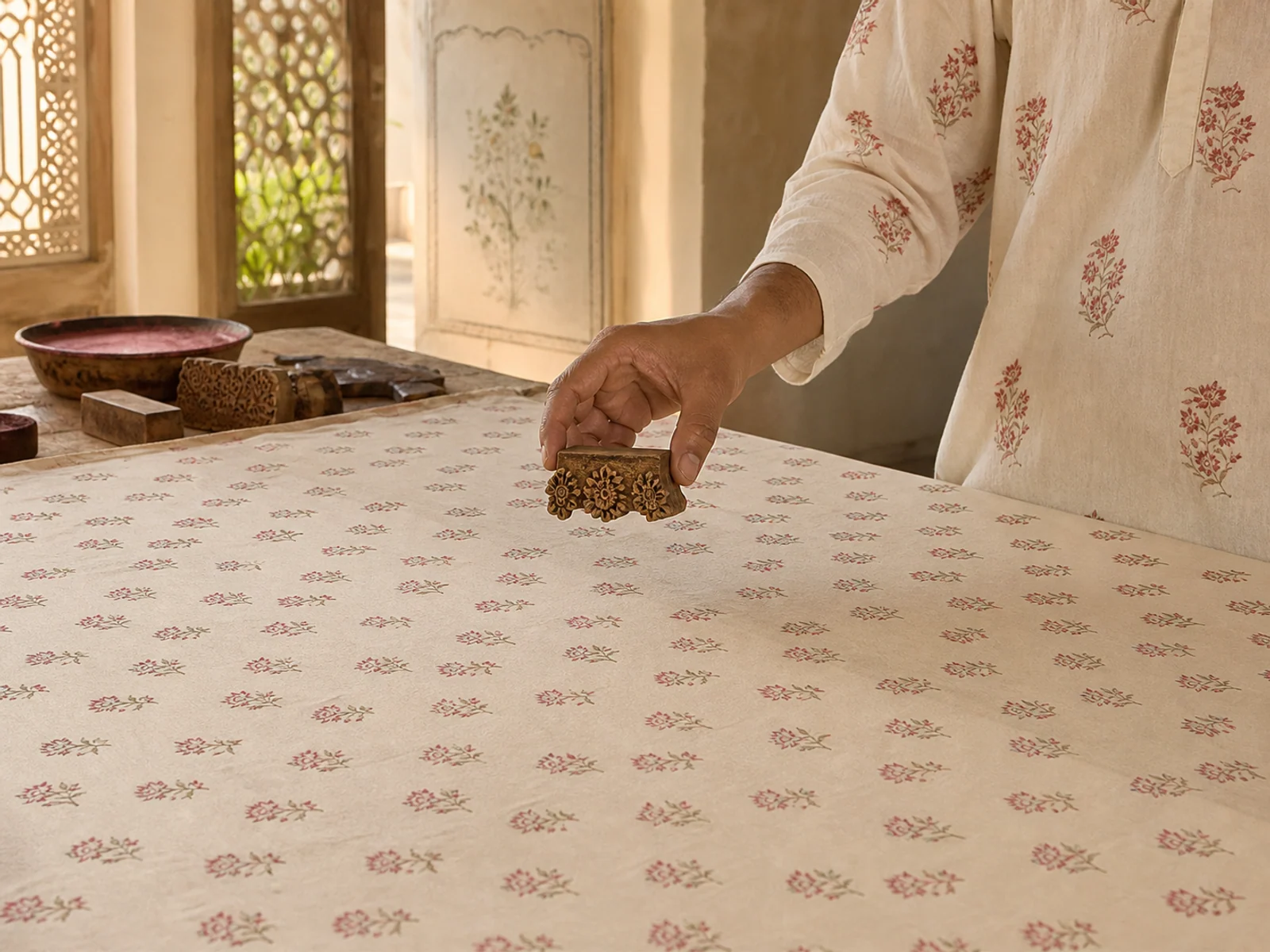
Sanganeri cloth is often recognised before it is named: a bright ground, a small flowering sprig, an elegantly curling stem and enough open space for the fabric to feel luminous. The tradition grew in Sanganer near Jaipur and became celebrated for exceptionally fine block carving and the graceful translation of the natural world into repeat.
“The hand is visible not in one perfect mark, but in the rhythm carried across the cloth.”
A garden organised by hand
Roses, lotuses, sunflowers, leaves, buds, birds and paisleys appear in stylised form. The printer does not merely scatter them; spacing and repeat turn separate blocks into a continuous visual garden. Fine outline blocks preserve delicacy, while filling blocks introduce colour without closing the ground.
Why the pale ground matters
White and off-white grounds amplify line, colour and empty space. On cotton voile they feel airy; on silk-cotton they become translucent and formal. Historically, access to water and specialised washing and finishing contributed to Sanganer’s bright, clear surfaces.
Wearing Sanganeri print now
Small butis are particularly adaptable because they read as texture from a distance and reveal botanical detail up close. Pair them with a woven border, a sheer dupatta or a single saturated colour. The result can be refined without becoming ornate.
Frequently asked
What are the main Sanganeri motifs?
Floral butis and butas, vines or bel, all-over jaal, paisleys, leaves and birds are common.
Is Sanganeri print GI protected?
Yes. Sanganeri hand block printing is recognised as a geographical-indication craft associated with its regional origin.