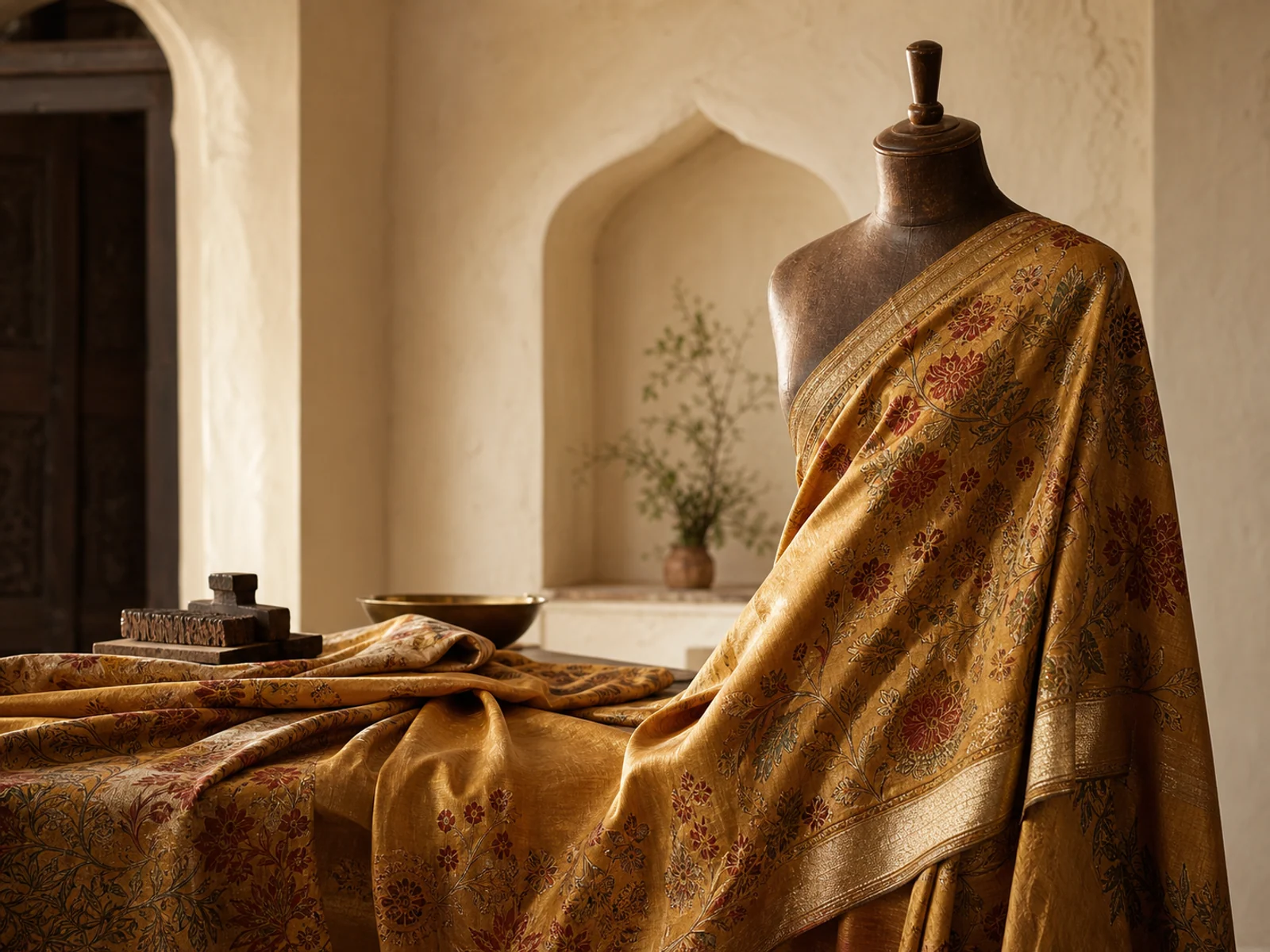
Gajji silk is loved for a substantial, fluid hand and a glow that appears burnished rather than brittle. Its surface receives saturated colour beautifully, which is why it is often chosen for painterly prints, Ajrakh-inspired compositions and sarees meant to hold both movement and visual depth.
“The hand is visible not in one perfect mark, but in the rhythm carried across the cloth.”
How Gajji feels
Compared with very crisp silks, Gajji feels supple and weighty. It falls close to the body, making it effective for sarees, relaxed kurta sets and garments where print should move in broad, continuous planes.
The exact handle depends on yarn, weave, finishing and silk purity. Composition should be confirmed for each garment rather than inferred from the name alone.
Why printers value it
The smooth face holds fine outlines while the fibre gives colour unusual depth. Deep indigo, madder, moss and charcoal can appear layered; metallic or embroidered accents then sit against a rich but not overly shiny ground.
Care and storage
Dry cleaning is usually safest for embellished or richly printed silk. Avoid perfume directly on the fabric, prolonged sunlight and wire hangers. Store folded in breathable cloth and change the folds occasionally to prevent permanent creasing.
Frequently asked
Is Gajji silk pure silk?
Gajji traditionally refers to a silk weave, but commercial compositions vary. Confirm fibre content with the seller for the specific piece.
Is Gajji silk suitable for sarees?
Yes. Its fluid fall, colour depth and burnished sheen make it especially suited to expressive printed sarees.