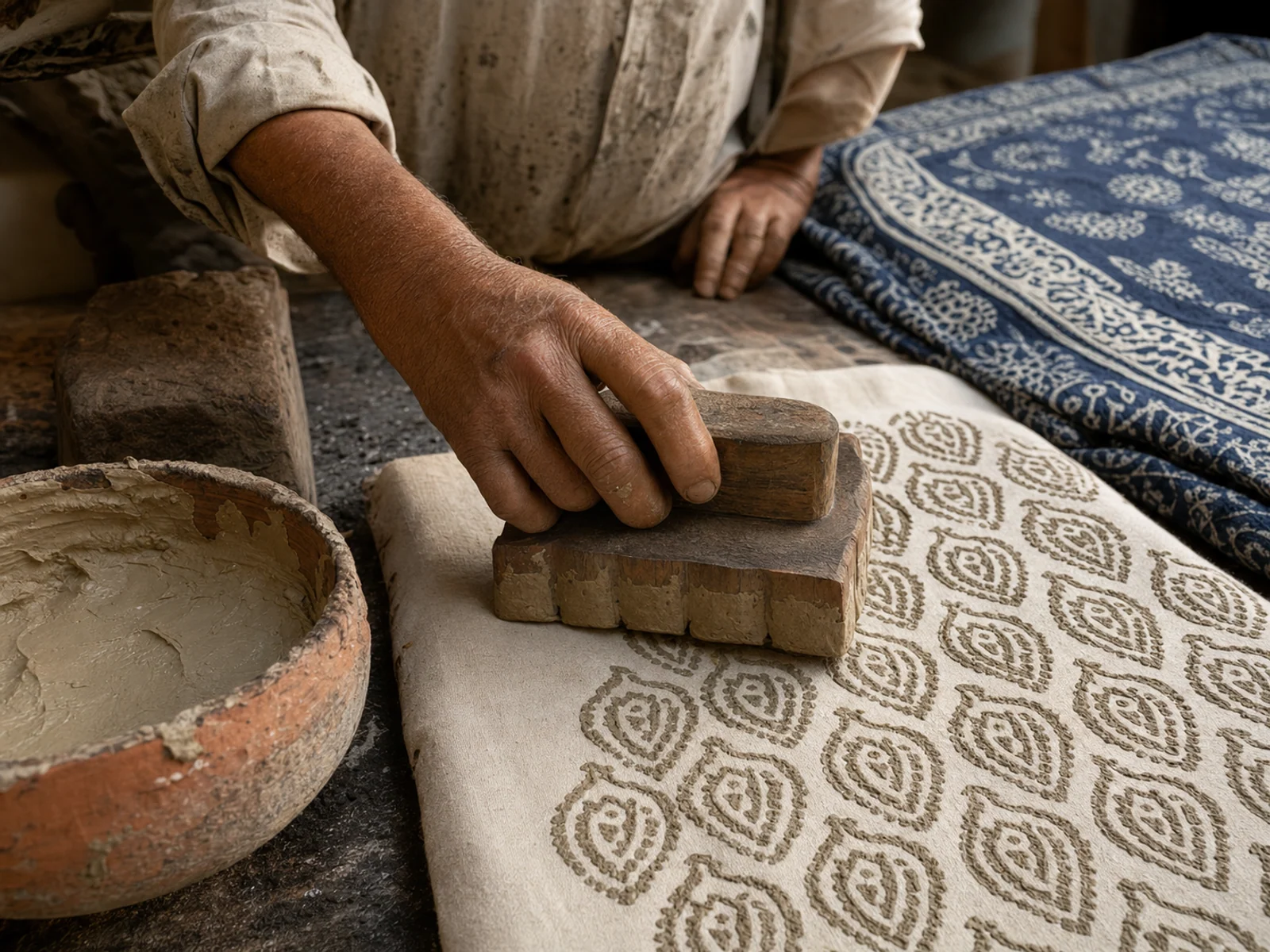
Dabu reverses the normal expectation of printing. The block does not deliver the final colour; it places a mud-based resist that protects selected areas when cloth enters a dye bath. After dyeing and washing, the resisted motifs emerge from the darker ground with soft edges and a characteristic, gently weathered life.
“The hand is visible not in one perfect mark, but in the rhythm carried across the cloth.”
From prepared cloth to resisted motif
Cotton is washed and often treated before printing. The artisan prepares Dabu paste from locally adapted combinations of clay or mud, natural gum and binding material. A carved block places the paste onto cloth; sawdust may be scattered over it so adjacent layers do not stick and the resist survives handling.
Once dry enough, the fabric is dyed—often in indigo or another deep bath. The covered area resists penetration. Washing releases the paste and reveals the pattern.
The beauty of the imperfect edge
Dabu is admired for its tactile outline. The paste can crack slightly as cloth moves, allowing fine veins of dye to enter. Those marks are part of the process’s identity. An absolutely flat, digitally clean imitation misses the dialogue between flexible fabric and an earthen resist.
Dabu in a contemporary suit
A Dabu repeat already carries visual depth, so the silhouette can remain calm. Straight trousers, an unforced neckline and restrained embroidery allow the resist surface to lead. Terracotta, indigo, ivory and iron black layer especially well with antique gold, leather and hand-finished jewellery.
Frequently asked
Does Dabu print fade?
Some softening is natural, especially with deep dyes. Cold gentle washing, mild detergent and shade drying help preserve the colour.
Why does Dabu print look crackled?
Fine crackle can form when the dried resist flexes, allowing tiny lines of dye through. It is a characteristic of the process.